The Nave and Grave of the Unknown Warrior
London, United Kingdom

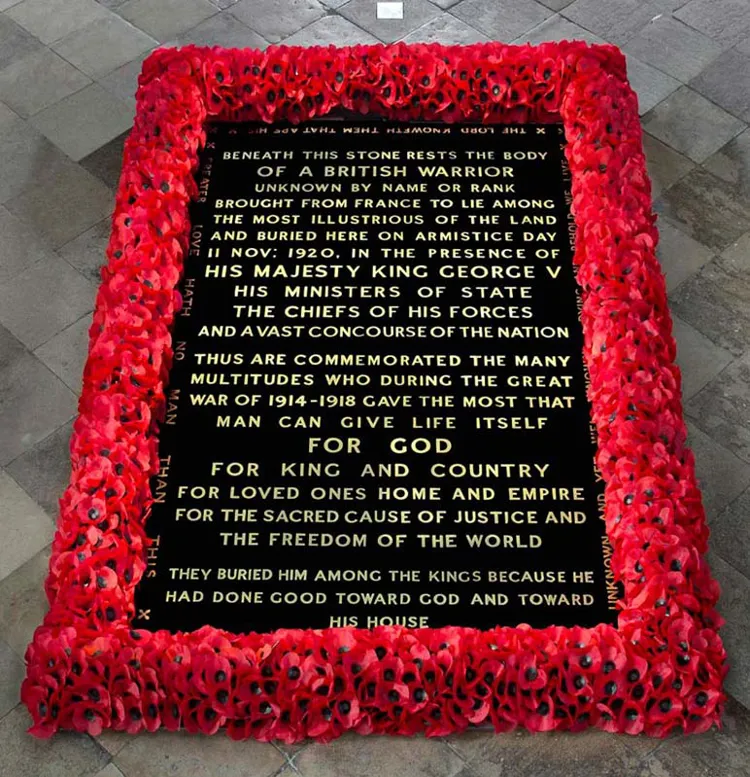
Discover the poignant Grave of the Unknown Warrior in London's Westminster Abbey, a powerful symbol honoring all unidentified British servicemen.
<h2>Overview</h2><p>Deep within the venerable walls of Westminster Abbey in London, United Kingdom, lies a profoundly moving memorial: The Nave and Grave of the Unknown Warrior. This sacred site serves as a poignant tribute to the countless British servicemen who lost their lives in World War I and whose remains were never identified or returned to their families. Interred with full state honors on Armistice Day, 11 November 1920, this grave has become one of the most significant war memorials in the world, embodying the immense sacrifice made by ordinary individuals for their nation.</p><p>Situated at the west end of the Abbey's Nave, the grave is a powerful focal point for remembrance, drawing visitors from across the globe seeking to pay their respects and reflect on the profound cost of conflict.</p><h2>History & Cultural Background</h2><p>The concept of the Tomb of the Unknown Warrior emerged from the harrowing experiences of World War I. The idea was first conceived in 1916 by Reverend David Railton, an army chaplain serving on the Western Front. He noticed a grave marked only with a rough cross bearing the inscription 'An Unknown British Soldier,' and this image deeply affected him.</p><p>In 1920, Railton wrote to the Dean of Westminster, Herbert Ryle, proposing that an unidentified British soldier from the French battlefields be brought home and buried in Westminster Abbey. The Dean enthusiastically supported the idea, and it quickly gained approval from Prime Minister David Lloyd George and King George V.</p><p>A secretive selection process followed. Unidentified bodies were exhumed from various battle areas on the Western Front – specifically the Aisne, Arras, Ypres, and the Somme. These remains were brought to a temporary chapel at St. Pol, France, where Brigadier General Louis Wyatt made the final, random selection of one body to be the Unknown Warrior. This ensures that the identity of the warrior remains forever a mystery, symbolizing all those who fell.</p><p>The chosen warrior's coffin, draped in a Union Flag, began a solemn journey, transported by HMS Verdun to Dover, then by train to London. On 11 November 1920, the coffin was drawn on a gun carriage through silent, immense crowds to Westminster Abbey, where a state funeral was held simultaneously with the unveiling of the Cenotaph in Whitehall. King George V himself dropped French earth onto the coffin as it was lowered into the grave.</p><h2>What Makes It Special</h2><p>The Grave of the Unknown Warrior holds a unique place in national memory and within Westminster Abbey itself. It is the only gravestone in the Abbey that visitors are forbidden to walk upon, a mark of profound respect for the sacrifice it represents. This grave is not merely a memorial to one individual but stands as a powerful symbol for all British service personnel who died in war with no known grave, regardless of their service branch (Army, Navy, or Air Force) or origin within the British Empire.</p><p>The Unknown Warrior was granted a full state funeral, an unprecedented honor for an anonymous person, highlighting the nation's collective mourning and gratitude. The appeal of this memorial lies in its universalism, offering a focal point for grief and remembrance for all who lost loved ones and never had a final resting place to visit. It embodies a sense of equality in death, transcending social class and military rank.</p><h2>Stories, Fun Facts & Local Details</h2><ul><li><strong>Royal Wedding Tradition:</strong> A poignant tradition began in 1923 when Lady Elizabeth Bowes-Lyon (later Queen Elizabeth The Queen Mother), on her way to marry the future King George VI, paused to lay her bridal bouquet on the Grave of the Unknown Warrior. This was a tribute to her brother Fergus, who died at the Battle of Loos in 1915. Royal brides marrying at Westminster Abbey have since followed this tradition.</li><li><strong>Medal of Honor:</strong> A year after his burial, on 17 October 1921, the Unknown Warrior was posthumously awarded the United States' highest award for valor, the Medal of Honor, presented by General John Pershing. This medal hangs on a pillar near the tomb within the Abbey. In a reciprocal gesture, the American Unknown Soldier was awarded the Victoria Cross.</li><li><strong>The Padre's Flag:</strong> The Union Flag that draped the Warrior's coffin during its journey from France was the same flag Reverend David Railton had used as an altar cloth during his service on the Western Front. This flag, known as 'The Padre's Flag,' is now displayed in the Abbey.</li><li><strong>Earth from the Battlefields:</strong> The grave itself contains 100 sandbags of earth brought from the battlefields of France, symbolically connecting the final resting place in London to the ground where so many fell.</li><li><strong>Unique Inscription:</strong> The black Belgian marble slab covering the grave bears a powerful inscription, composed by Dean Herbert Ryle, which includes the lines: 'They buried him among the Kings because he had done good toward God and toward his house.'</li></ul><h2>Visitor Perspective</h2><p>Visiting The Nave and Grave of the Unknown Warrior is a deeply moving and reflective experience. As you enter Westminster Abbey, the grave is prominently located at the western end of the Nave, making it one of the first significant memorials encountered. The atmosphere is one of profound reverence and quiet solemnity. Thousands of people, including heads of state and ordinary citizens, continue to visit this site annually to honor the fallen.</p><p>The simplicity of the black marble slab, contrasting with the grandeur of the Abbey, underscores the immense personal loss and collective grief it represents. It serves as a powerful reminder of the sacrifices made during wartime and encourages a moment of personal reflection on peace and remembrance. The ongoing tradition of royal brides laying their bouquets here further emphasizes its enduring significance as a national shrine. For many, it offers a tangible connection to history and a silent space to contemplate the universal impact of conflict.</p>
Location
Coordinates: -0.127465, 51.49939
View on Google Maps