Westminster Abbey
London, United Kingdom

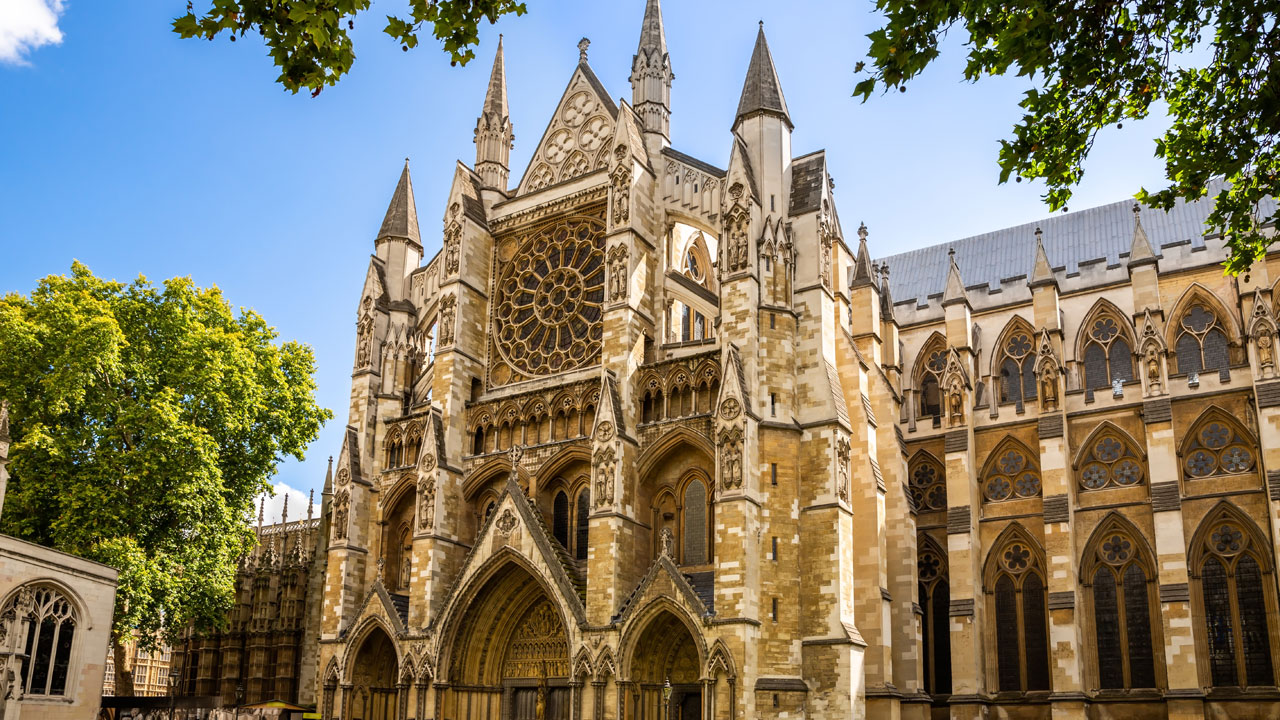
Explore Westminster Abbey in London, United Kingdom. Discover centuries of royal history, Gothic architecture, coronations, and the resting place of kings, queens, poets, and scientists.
<h2>Overview</h2><p>Westminster Abbey, officially known as the Collegiate Church of Saint Peter at Westminster, is a historic and iconic church nestled in the heart of London, United Kingdom. This architectural marvel stands as a UNESCO World Heritage Site, celebrated for its magnificent Gothic design and its profound, centuries-old ties to British royal history. For nearly a millennium, it has been the traditional and sacred venue for coronations, royal weddings, and the final resting place for numerous monarchs and esteemed figures, echoing the very heartbeat of the nation.</p><h2>History & Cultural Background</h2><p>The origins of Westminster Abbey trace back to a Benedictine monastery established on what was once Thorney Island around the mid-10th century. A pivotal moment arrived between 1042 and 1052 when King Edward the Confessor initiated the construction of a grand stone church in the Romanesque style, envisioning it as his royal burial place. He was eventually interred within its walls in 1066.</p><p>The present and largely recognizable Gothic structure began to take shape under the ambitious patronage of King Henry III in 1245. He desired a majestic royal shrine, designed to rival the grand cathedrals emerging across continental Europe, specifically drawing inspiration from the French Gothic style. This monumental rebuilding introduced characteristic features such as soaring pointed arches, intricate ribbed vaults, and elegant flying buttresses. Following the tumultuous period of the dissolution of the monasteries, Queen Elizabeth I granted the Abbey a unique status in 1559, designating it a 'Royal Peculiar'. This means it falls directly under the sovereign's authority, rather than that of a bishop or diocese, underscoring its direct allegiance to the monarch. Through its transformations, the Abbey has consistently served as a vital stage for national events, evolving from a monastic center to an enduring and powerful symbol of British heritage.</p><h2>What Makes It Special</h2><p>Westminster Abbey is an architectural masterpiece, predominantly showcasing the Gothic style, with elements that span from the 13th to the 18th centuries. A highlight is the breathtaking Henry VII Chapel, completed between 1503 and 1519. This chapel is a stunning example of Perpendicular Gothic architecture, famed for its magnificent fan-vaulted ceiling that an antiquarian once called 'the wonder of the world'.</p><p>Its most distinguished role lies in being the coronation church for British monarchs; every coronation since William the Conqueror in 1066 has been held here, a tradition that continues unbroken to the present day. Beyond coronations, the Abbey functions as a national necropolis, serving as the final resting place or housing memorials for an astonishing number of over 3,300 individuals. This includes 17 monarchs, numerous prime ministers, and celebrated figures from diverse fields such as literature, science, and the arts, earning it the poignant nickname 'Britain's Valhalla'.</p><p>Among its invaluable treasures is the ancient Coronation Chair, meticulously crafted in 1296, which has been used in every coronation ceremony since 1308. In the South Transept lies Poets' Corner, a hallowed ground for literary giants like Geoffrey Chaucer, Charles Dickens, and Rudyard Kipling, alongside groundbreaking scientists such as Sir Isaac Newton, Charles Darwin, and Stephen Hawking.</p><h2>Stories, Fun Facts & Local Details</h2><p>The name 'west minster' itself is a fun historical detail, distinguishing it from St Paul's Cathedral, which was known as the 'east minster'. Another intriguing anecdote links the saying 'robbing Peter to pay Paul' to Henry VIII's dissolution of the monasteries, where funds intended for St Peter's Abbey were reportedly diverted to St Paul's Cathedral.</p><p>The Abbey proudly houses Britain's oldest door, a remarkable Anglo-Saxon relic dating back to approximately 1050 AD. This door, crafted from a single tree from Hainault, had its age precisely determined through dendrochronology, or tree-ring dating. The legendary Stone of Scone, also known as the Stone of Destiny, was famously kept beneath the Coronation Chair for centuries after Edward I brought it from Scotland. In a dramatic turn of events, it was briefly stolen by Scottish students in 1950 before its eventual return.</p><p>The 17th-century poet Ben Jonson holds a unique distinction: he is reportedly buried standing upright within the Abbey, a decision said to have been made to conserve space and cost. During the challenging years of World War II, approximately 60,000 sandbags were strategically deployed to protect the irreplaceable tombs and memorials, and the precious Coronation Chair was safely relocated to Gloucester Cathedral. More recently, in 2018, a vibrant stained-glass artwork known as 'The Queen's Window', designed by the renowned artist David Hockney, was installed to commemorate the reign of Queen Elizabeth II.</p><h2>Visitor Perspective</h2><p>Westminster Abbey remains a vibrant, active place of worship, welcoming all to its daily services, which are often free to attend. For general visitation, the Abbey typically opens its doors Monday through Saturday, though hours may vary, and it is usually closed to tourists on Sundays to facilitate worship. It is always advisable to consult the official website for the most current opening times, as closures for special services or events can occur.</p><p>A visit to this extraordinary landmark allows travelers to immerse themselves in over a thousand years of British history, offering the chance to explore the solemn royal tombs, the evocative Poets' Corner, the magnificent Lady Chapel, and the sacred Shrine of St Edward the Confessor. Many choose to enhance their experience with guided tours, often led by the Abbey's knowledgeable vergers, which can provide deeper insights and sometimes access to areas not typically open to the general public. An informative audio guide, usually included with admission, helps bring the Abbey's rich history to life as you wander through its hallowed halls.</p>
Location
Coordinates: -0.1275, 51.49944
View on Google Maps