Rock Formations
Mecca, Saudi Arabia

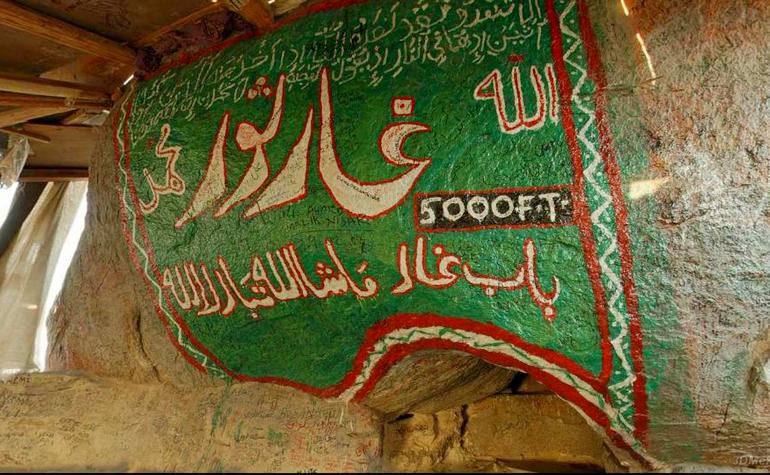
Explore the sacred Cave of Thawr within Mount Thawr in Mecca, Saudi Arabia. Discover its profound Islamic history, unique rock formations, and spiritual significance. A pivotal site in the Prophet Muhammad's Hijrah.
<h2>Overview</h2> <p>Nestled approximately 4 to 12 kilometers south of the revered Masjid al-Haram in Mecca, Saudi Arabia, Mount Thawr, known in Arabic as Jabal Thawr, stands as a formidable part of the rugged Hejaz Mountain range. Rising to an elevation of around 750 to 760 meters above sea level, this mountain is more than just a geological landmark; it is a profound site of immense historical and spiritual significance within Islam. Its most celebrated feature, the Cave of Thawr (Ghar Thawr), is the specific rock formation that draws countless pilgrims and history enthusiasts from across the globe.</p> <p>The mountain itself is composed primarily of granitic rocks, a type of intrusive igneous rock formed deep within the Earth's crust some 500-600 million years ago during the Precambrian era. This ancient geological foundation contributes to the steep, rugged terrain and rocky outcrops that characterize Mount Thawr, offering a stark and powerful natural backdrop to the pivotal events that unfolded here.</p> <h2>History & Cultural Background</h2> <p>The historical gravitas of Mount Thawr centers entirely on the miraculous refuge taken by Prophet Muhammad (PBUH) and his loyal companion Abu Bakr (RA) during their perilous migration, or Hijrah, from Mecca to Medina. Facing intense persecution from the Quraysh tribe, the Prophet (PBUH) and Abu Bakr (RA) secretly departed Mecca and sought sanctuary within the Cave of Thawr. They remained hidden for three days and three nights, evading their pursuers who were actively searching for them.</p> <p>This event is a cornerstone of Islamic history, marking the beginning of the Islamic calendar and symbolizing divine protection and unwavering faith. The story of their concealment is not only a testament to their courage but also highlights the loyalty of Abu Bakr (RA) and the miraculous intervention believed to have occurred to safeguard them. The significance of their stay in the cave is even immortalized in the Quran, specifically in Surah At-Tawbah (9:40), which speaks to Allah's aid for the Prophet (PBUH) during his flight.</p> <h2>What Makes It Special</h2> <p>The Cave of Thawr is remarkable not only for its historical narrative but also for its unique physical attributes. It is described as a hollow opening within a massive rock, with an entrance so narrow that one must crouch or crawl to enter. This natural constriction inadvertently served as a part of their protection.</p> <p>Beyond the cave, the mountain's granitic rock formations create a distinctive landscape. The challenging ascent to the cave's summit, often taking 1.5 to 2 hours, rewards visitors with panoramic views of the surrounding Meccan landscape. This rugged environment, with its barren rocky surfaces and sparse vegetation, offers a tangible connection to the ancient world and the arduous journey undertaken by the Prophet (PBUH). The raw, untouched nature of these rock formations makes Mount Thawr a site of profound geological and spiritual interest.</p> <h2>Stories, Fun Facts & Local Details</h2> <p>The most enduring and heartwarming story associated with the Cave of Thawr is that of the miraculous protection. As the Quraysh search party closed in, Allah (SWT) is believed to have commanded a spider to weave an intricate web across the cave's entrance. Simultaneously, a pair of doves nested and laid eggs near the opening. When the pursuers arrived, seeing the seemingly undisturbed web and the nesting birds, they concluded that no one could have recently entered the cave, thus diverting their search. This act of divine intervention cemented the cave's status as a symbol of hope and protection.</p> <p>Another poignant detail involves Abu Bakr (RA)'s devotion. Upon reaching the cave, he entered first to clear any potential hazards, even stuffing holes with pieces of cloth. During their stay, he endured a scorpion or snake sting without flinching, fearing he would wake the sleeping Prophet (PBUH) on his lap. His tears, however, fell upon the Prophet (PBUH)'s face, revealing his pain and loyalty. Abu Bakr's son, Abdullah, also played a crucial role, secretly gathering intelligence in Mecca by day and delivering food and news to the cave by night.</p> <h2>Visitor Perspective</h2> <p>For countless pilgrims and visitors, ascending Mount Thawr and reaching the Cave of Thawr is a deeply moving experience. It is not merely a physical climb but a spiritual journey, allowing one to retrace the footsteps of the Prophet Muhammad (PBUH) and Abu Bakr (RA) and connect with one of the most pivotal moments in Islamic history. Many describe feeling the weight of those historical moments, reflecting on the strength, patience, and divine grace that characterize the Hijrah.</p> <p>While the path to the cave can be steep and challenging, the sense of accomplishment and spiritual connection upon reaching it is profound. At the base of Jabal Thawr, visitor orientation centers provide guidance and assistance, ensuring a more informed journey. Standing within the ancient rock formations of the cave and gazing out from the mountain's summit offers a unique perspective, making the visit an unforgettable encounter with faith and history.</p>
Location
Coordinates: 39.85083, 21.3775
View on Google Maps