Medusa Heads
Istanbul, Turkey

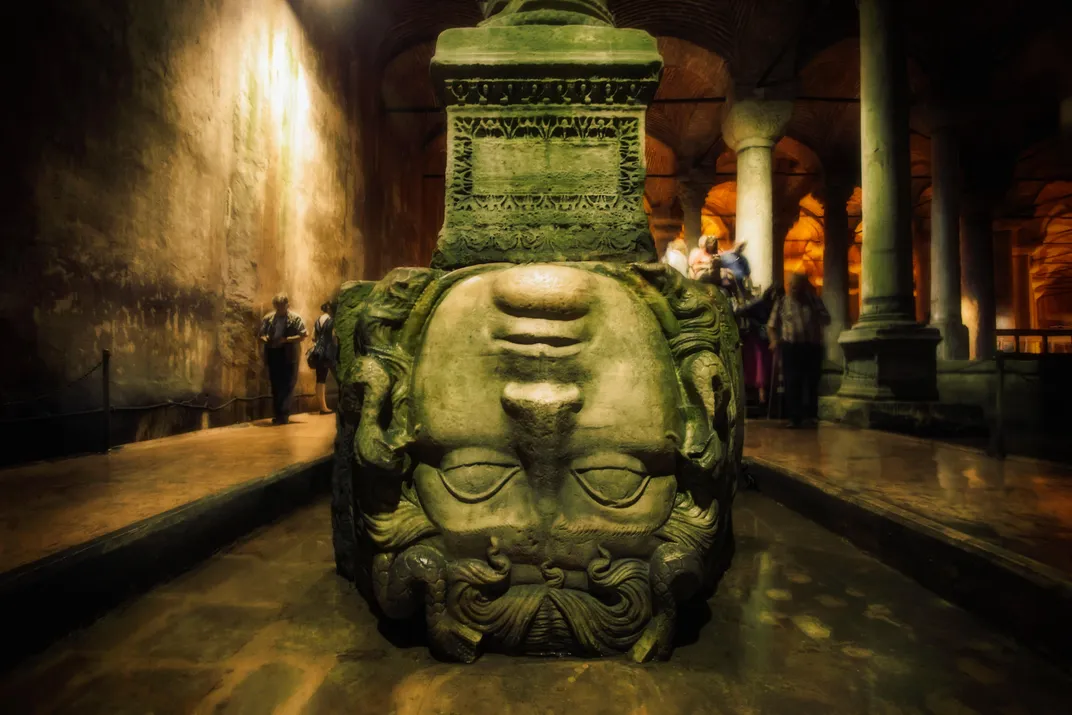
Discover the enigmatic Medusa Heads in Istanbul's ancient Basilica Cistern. Unravel myths, history, and theories behind their mysterious placement in this Byzantine marvel.
<h2>Overview</h2><p>Deep beneath the vibrant streets of Istanbul, Turkey, lies the ancient and atmospheric Basilica Cistern, known in Turkish as Yerebatan Sarnıcı or 'Sunken Palace'. This magnificent underground reservoir, a marvel of Byzantine engineering, is home to a captivating enigma: the Medusa Heads. These two intricately carved marble blocks serve as bases for columns in the cistern's northwestern corner, drawing visitors into a world where history, mythology, and mystery intertwine. Their unusual placement—one sideways and the other inverted—has fueled centuries of speculation, making them one of Istanbul's most iconic and intriguing attractions.</p><p>The Basilica Cistern itself dates back to the 6th century, commissioned by Byzantine Emperor Justinian I to provide water to the Great Palace and other imperial buildings. It is an immense subterranean chamber supported by a 'forest' of 336 marble columns, creating a breathtaking and somewhat eerie ambiance that transports visitors back in time.</p><h2>History & Cultural Background</h2><p>The construction of the Basilica Cistern during the reign of Emperor Justinian I (527-565 AD) was a monumental undertaking, designed to ensure a consistent water supply for Constantinople. Many of the columns and architectural elements, including the Medusa Heads, were repurposed from older structures, a common practice known as 'spolia' during the Byzantine era. This reuse of materials was both economical and symbolic, integrating fragments of the past into new imperial projects.</p><p>The precise origin of the Medusa Heads remains a subject of historical debate. Theories suggest they were brought from an ancient Roman building, perhaps a pagan temple, or even the Forum of Constantine, where similar carvings have been discovered. Their presence reflects the rich layers of history that define Istanbul, a city built upon successive civilizations, each leaving its indelible mark. The cistern was largely forgotten during the Ottoman era, with locals reportedly drawing water and even catching fish from their basements, until it was rediscovered by a Western scholar in the 16th century.</p><h2>What Makes It Special</h2><p>The Medusa Heads stand out as the most compelling and enigmatic feature within the already impressive Basilica Cistern. Their sheer size and intricate carving are remarkable, but it is their unusual orientation that truly captures the imagination: one head is turned on its side, and the other is completely upside down. This deliberate, yet mysterious, placement has made them a subject of countless myths and theories.</p><p>The dim lighting and the reflective surface of the water in the cistern create a dramatic and surreal visual experience, enhancing the mystical aura surrounding these ancient relics. The Medusa Heads offer a tangible connection to ancient Greek and Roman mythology within a Byzantine setting, making them a unique blend of cultural heritage. They are not merely decorative; they serve as structural bases for some of the cistern's columns, showcasing the ingenuity of ancient builders in adapting available materials for functional purposes.</p><h2>Stories, Fun Facts & Local Details</h2><p>The most enduring legend surrounding the Medusa Heads is that their unusual orientation was a deliberate act to neutralize the Gorgon's petrifying gaze. According to Greek mythology, Medusa had snakes for hair and could turn anyone who looked her directly in the eye into stone. By positioning the heads sideways or upside down, the builders were believed to be rendering her power harmless, ensuring the safety of the cistern and its visitors.</p><p>Another theory suggests a symbolic inversion of paganism. In early Christian times, repurposing and sometimes demeaning pagan symbols was a way to assert the dominance of the new faith over older beliefs. Alternatively, some historians believe the Medusa image, an apotropaic symbol, was intended to ward off evil spirits and protect the cistern. A more practical explanation posits that the heads were simply convenient, heavy blocks used as column bases, and their orientation was merely the easiest way to fit them into the construction.</p><p>Beyond the Medusa Heads, visitors often notice that many of the cistern's 336 columns are mismatched in style and size, a testament to the fact that they were salvaged from various earlier Roman structures across the empire. One column, known as the 'Crying Column' or 'Tear Column', is adorned with peacock eye motifs and is said to shed tears for the thousands of slaves who died during the cistern's construction.</p><h2>Visitor Perspective</h2><p>Visiting the Basilica Cistern and encountering the Medusa Heads is an unforgettable experience. As you descend into the cool, dimly lit underground space, the echoing sounds and the reflections on the shallow water create an otherworldly atmosphere. Wooden walkways guide you through the 'forest' of columns, leading to the mysterious Medusa figures tucked away in the northwestern corner.</p><p>The sheer scale of the cistern is awe-inspiring, but it is the Medusa Heads that provide a focal point for contemplation and wonder. Travelers are encouraged to ponder the various theories behind their placement and the rich tapestry of myths they represent. The overall experience is one of stepping into an ancient, whispered secret, a place where history feels alive and every shadow seems to hold a story. It's a journey into Istanbul's profound past, offering a moment of quiet reflection amidst the city's bustling energy.</p>
Location
Coordinates: 28.977762, 41.008362
View on Google Maps