Courtyard
Istanbul, Turkey

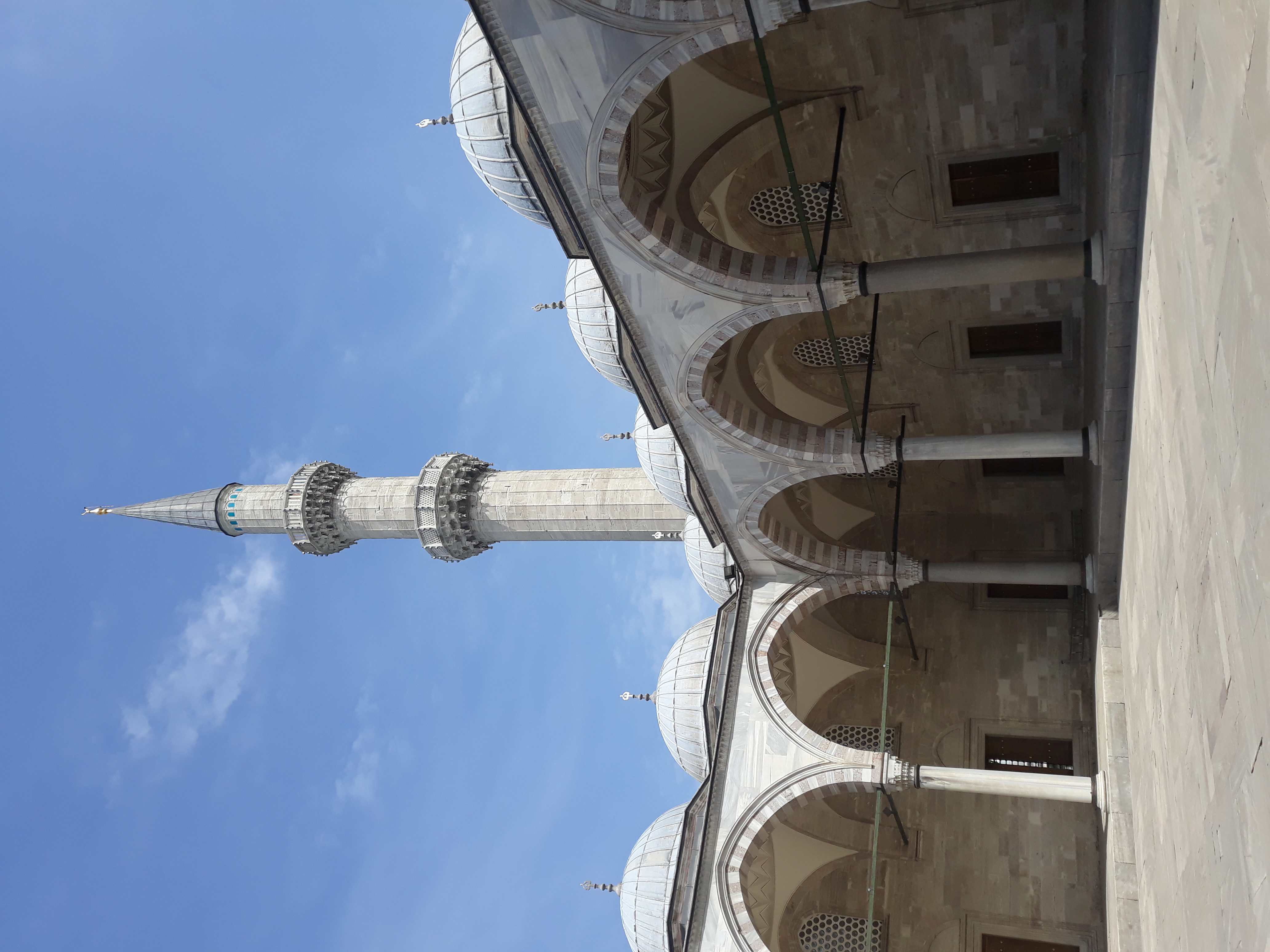
Explore the majestic courtyard of the Süleymaniye Mosque in Istanbul, Turkey. Discover its history, Mimar Sinan's architecture, and cultural significance.
<h2>Overview</h2><p>Stepping into the courtyard of the Süleymaniye Mosque in Istanbul, Turkey, is like entering a realm where history and architectural grandeur converge. This expansive forecourt, known as the avlu, serves as a magnificent prelude to one of the Ottoman Empire's most iconic structures. Situated majestically on Istanbul's Third Hill, the Süleymaniye Mosque complex, including its courtyard, offers breathtaking panoramic views of the Golden Horn and the city skyline. Designed by the legendary architect Mimar Sinan for Sultan Suleiman the Magnificent, the courtyard is an integral part of the mosque's harmonious design, welcoming visitors with its serene marble paving and stately arcades.</p><h2>History & Cultural Background</h2><p>The construction of the Süleymaniye Mosque and its courtyard began in 1550 and was largely completed by 1557, though some elements of the broader complex continued until 1559. This monumental undertaking was commissioned by Sultan Suleiman I, often called Suleiman the Magnificent, who envisioned a mosque that would rival and even surpass the grandeur of Hagia Sophia. Mimar Sinan, the chief imperial architect, brought this vision to life, creating a masterpiece that stands as a pinnacle of Classical Ottoman architecture. The mosque, along with its extensive külliye (a complex of religious and charitable institutions including madrasas, a hospital, and a public kitchen), was designated a UNESCO World Heritage Site as part of the Historic Areas of Istanbul.</p><p>Throughout its long history, the courtyard has witnessed both reverence and hardship. It suffered damage during the great fire of 1660 and again after an earthquake in 1766. Notably, during World War I, the courtyard was used as a weapons depot, and a fire caused by igniting ammunition led to further damage, necessitating significant restoration efforts that extended until 1956.</p><h2>What Makes It Special</h2><p>The Süleymaniye Mosque's courtyard is remarkable for its architectural symmetry and the meticulous craftsmanship evident in every detail. The entrance to the mosque is heralded by a grand forecourt featuring a central fountain. Surrounding the courtyard are elegant arcades, supported by columns crafted from high-quality porphyry, marble, and granite. The alternating red and white voussoirs forming the arches of the colonnade are a signature element of Islamic architecture, creating a visually striking pattern.</p><p>Perhaps the most distinctive features of the courtyard are its four towering minarets, positioned at each corner. Two taller minarets boast three balconies each, while the two at the entrance façade have two balconies. These minarets are not merely decorative; their number and the total count of their balconies carry significant symbolic meaning, reflecting the Sultan's imperial status.</p><p>In the center of the courtyard, a rectangular marble fountain, known as a şadırvan, once served for ritual ablutions. While now primarily decorative, its original design featured an unusual mechanism where water sprayed from the ceiling into the basin below. The grand main front gate, projecting outward, further emphasizes the courtyard's role as a majestic entrance to the sacred space within.</p><h2>Stories, Fun Facts & Local Details</h2><ul><li><strong>Symbolic Minarets:</strong> The four minarets of the Süleymaniye Mosque signify that Sultan Suleiman I was the fourth Ottoman Sultan to rule Istanbul after its conquest. The total of ten balconies (şerefe) across all minarets symbolizes his position as the tenth Sultan in the Ottoman dynasty.</li><li><strong>The Külliye's Reach:</strong> Beyond being a place of worship, the Süleymaniye complex was a self-sufficient community hub. Its külliye included four madrasas for advanced Islamic education, a medical school with a hospital, a public kitchen (imaret) that fed over a thousand people daily (including Muslims, Christians, and Jews), and even a caravanserai for travelers. The size of a millstone in its courtyard hints at the vast quantities of grain processed to sustain these operations.</li><li><strong>A Historic Depot:</strong> During World War I, the mosque's courtyard was repurposed as an ammunition storage area, a decision that unfortunately led to a devastating fire.</li><li><strong>A Peaceful Respite:</strong> Visitors often remark on the tranquil atmosphere of the courtyard, providing a calm space for reflection before or after exploring the main mosque. It's not uncommon to spot friendly stray cats enjoying the peaceful surroundings.</li></ul><h2>Visitor Perspective</h2><p>Approaching the Süleymaniye Mosque through its grand courtyard is an experience in itself. The vast, open space offers a sense of calm and perspective, allowing visitors to appreciate the sheer scale and architectural brilliance of Mimar Sinan's design. As you walk across the marble pavement, beneath the shaded arcades, you can admire the intricate details of the columns and the imposing minarets reaching towards the sky. The courtyard is a perfect spot to pause, absorb the historical ambiance, and capture photographs of the mosque's impressive exterior against the backdrop of Istanbul's panoramic views. It serves as an active place of worship, so visitors are kindly reminded to observe respectful dress codes and be mindful of prayer times. This initial encounter with the courtyard sets the tone for the profound historical and spiritual journey that awaits inside the Süleymaniye Mosque.</p>
Location
Coordinates: 28.96376, 41.016064
View on Google Maps