Black Stone
Mecca, Saudi Arabia

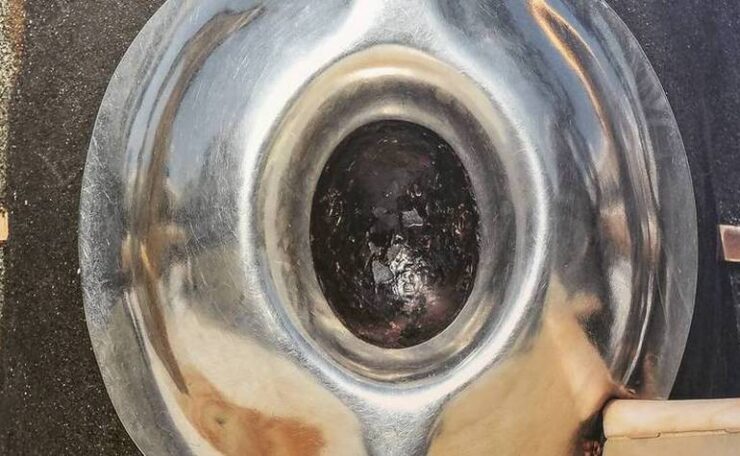
Discover the Black Stone in Mecca's Masjid al-Haram, Saudi Arabia – a sacred Islamic relic with a rich history and deep cultural significance.
<h2>Overview</h2><p>Deep within the revered Masjid al-Haram in Mecca, Saudi Arabia, lies the Black Stone, known in Arabic as al-Hajar al-Aswad. This ancient and profoundly significant relic is set into the eastern corner of the Kaaba, the cuboid building at the heart of the Grand Mosque. For millions of Muslims worldwide, the Black Stone is not merely a rock; it is a sacred focal point, a tangible link to a profound spiritual heritage, and a marker of devotion during the pilgrimage rituals of Hajj and Umrah.</p><p>Its dark, irregularly shaped fragments, carefully held together by cement and encased in a gleaming silver frame, are a testament to centuries of reverence and a rich, multifaceted history. Standing approximately 1.5 meters above the ground, it marks the starting and ending point for the circumambulation ritual known as Tawaf, a key component of the pilgrimage.</p><h2>History & Cultural Background</h2><p>The history of the Black Stone predates Islam, having been revered in pre-Islamic Arabian traditions. According to Islamic tradition, its origins trace back to the time of Adam and Eve, believed to have descended from heaven. Legend holds that the stone was originally pure white, but over millennia, it gradually turned black, stained by the sins of humanity who have touched and kissed it.</p><p>The narratives further recount that Prophet Ibrahim (Abraham) and his son Ismail (Ishmael) were divinely commanded to rebuild the Kaaba, and it was during this reconstruction that the Black Stone was placed in its current position. Centuries later, around 605 CE, before his prophethood, Prophet Muhammad played a pivotal role in re-setting the Black Stone after the Kaaba had been damaged by fire. He skillfully resolved a dispute among the Meccan clans, each vying for the honor of placing the sacred stone, by having them all participate.</p><p>The Black Stone has endured a tumultuous past, facing numerous challenges. It was damaged during the Siege of Mecca in 683 AD, which caused cracks. Perhaps its most dramatic incident was in 930 CE when it was stolen by the Qarmatians, an extreme Shi'i sect, and held for ransom for nearly two decades before being returned.</p><h2>What Makes It Special</h2><p>What makes the Black Stone truly special is its profound symbolic significance within Islam. While Muslims do not worship the stone itself – a principle emphasized by Islamic teachings – it serves as a powerful symbol of unity, humility, and the covenant between God and humanity.</p><p>It acts as a physical marker for pilgrims, guiding them through the Tawaf, the ritual circumambulation of the Kaaba performed seven times counter-clockwise. Starting and ending each circuit at the Black Stone creates a continuous, unifying stream of devotion. The act of touching or kissing the stone, if possible, is an emulation of Prophet Muhammad's practice and is believed by many to help absolve sins, reinforcing a direct, personal connection to their faith's heritage.</p><h2>Stories, Fun Facts & Local Details</h2><ul><li><strong>The Prophetic Placement:</strong> One of the most cherished stories recounts Prophet Muhammad's wisdom in resolving a dispute among the Meccan tribes regarding who would have the honor of placing the Black Stone during a reconstruction of the Kaaba. He suggested placing the stone on a cloth, with each tribal chief holding a corner, and then he himself lifted it into its final position. This act fostered unity and avoided conflict.</li><li><strong>Umar's Reverence:</strong> The second Caliph, Umar ibn al-Khattab, famously addressed the Black Stone, saying, 'I know that you are a stone that neither harms nor benefits. Had I not seen the Prophet (PBUH) kiss you, I would not have kissed you.' This statement underscores the principle that reverence for the stone is rooted in following the Prophet's example, not in worshipping the stone itself.</li><li><strong>A Fragmented Jewel:</strong> The Black Stone, as seen today, is not a single, smooth piece but a collection of fragments. It is set in an oval-shaped silver frame, with a visible surface of approximately 20 by 16 centimeters. These pieces are held together by a special paste, traditionally made from a blend of wax, musk, and amber, which contributes to its dark appearance and fragrance.</li><li><strong>High-Resolution Imaging:</strong> Recently, Saudi authorities have used advanced imaging technology, such as Fox Stack Panorama, to capture incredibly detailed, high-resolution photographs of the Black Stone, offering an unprecedented view of its surface and composition.</li></ul><h2>Visitor Perspective</h2><p>For pilgrims undertaking Hajj or Umrah, approaching the Black Stone is an immensely powerful and emotional experience. As they perform Tawaf, circling the Kaaba, many strive to reach the Black Stone to touch or kiss it, following the tradition of Prophet Muhammad. The area around the Black Stone can be densely crowded, especially during peak pilgrimage seasons, and reaching it often requires patience and effort.</p><p>If direct access is not possible due to the crowds, pilgrims symbolically point towards it at the beginning of each circuit, maintaining their connection to this sacred point. The profound spiritual energy and historical weight of the Black Stone leave an indelible mark on those who encounter it, serving as a powerful reminder of faith, continuity, and the shared journey of millions across generations. It is a moment of deep personal reflection and collective devotion within the Grand Mosque.</p>
Location
Coordinates: 39.8262, 21.4225
View on Google Maps