Masjid al-Haram
Mecca, Saudi Arabia

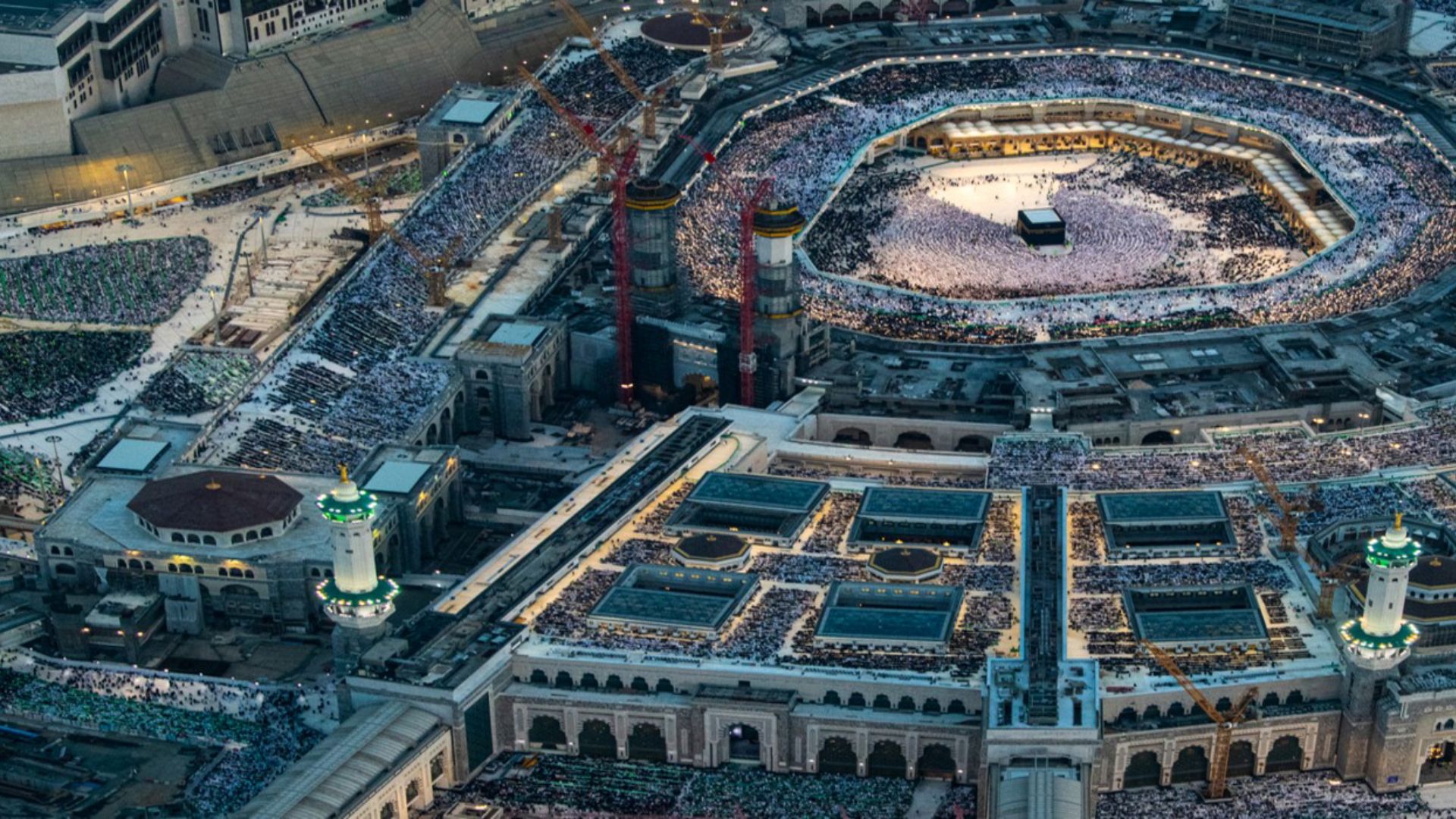
Discover Masjid al-Haram, the world's largest mosque in Mecca, Saudi Arabia, encompassing the sacred Kaaba and other significant Islamic sites.
<h2>Overview</h2><p>Masjid al-Haram, known as the Great Mosque of Mecca, is the largest mosque in the world and Islam's most sacred site, located in Mecca, Saudi Arabia. It encompasses the Kaaba, the cube-shaped structure towards which Muslims worldwide direct their daily prayers (Qibla). Millions of worshippers visit this holy sanctuary annually, particularly during the Hajj and Umrah pilgrimages. The sheer scale of Masjid al-Haram is awe-inspiring, capable of accommodating up to four million people, and covering an area of 3.8 million square feet (353,000 square meters). Its towering minarets and expansive prayer areas offer a profound spiritual experience to all who enter its sacred bounds.</p><h2>History & Cultural Background</h2><p>The origins of Masjid al-Haram are deeply rooted in Islamic tradition. The Kaaba, its central focus, is believed to have been built by Prophet Ibrahim (Abraham) and his son Ishmael as the first house of worship dedicated to one God. Initially, the area around the Kaaba was a modest, open space. The mosque's formal construction began in the 7th century under Caliph Umar ibn al-Khattab, who built a wall around the Kaaba to delineate a prayer area. Subsequent caliphs and rulers continuously expanded and embellished the structure, including significant renovations in the 8th century by Abbasid caliph Al-Mahdi, who relocated outer walls to centralize the Kaaba. The mosque underwent substantial rebuilding in 1571 under Ottoman Sultan Selim II, with the addition of domes and minarets, some of which are the oldest surviving parts of the modern structure. The 20th and 21st centuries have seen massive expansions, fueled by increased pilgrimage due to air travel and Saudi Arabia's oil wealth, dramatically increasing its capacity and modernizing its facilities.</p><h2>What Makes It Special</h2><p>At the heart of Masjid al-Haram lies the Kaaba, a cuboid structure draped in a black silk cloth known as the Kiswah. It is the focal point of Muslim prayer globally, symbolizing unity and devotion. Embedded in its eastern corner is the revered Black Stone (al-Hajar al-Aswad), which pilgrims traditionally seek to touch or kiss. Nearby is Maqam Ibrahim, or the Station of Abraham, a stone bearing what is believed to be the imprint of Prophet Ibrahim's feet from when he stood to build the Kaaba. Another significant feature is the Zamzam Well, a miraculous spring whose water is believed to have healing properties and is distributed throughout the mosque for pilgrims. The mosque also encompasses the hills of Safa and Marwa, between which pilgrims perform the ritual walk (Sa'i) during Hajj and Umrah, commemorating Hagar's search for water.</p><h2>Stories, Fun Facts & Local Details</h2><p>The name 'Masjid al-Haram' translates to 'The Sacred Mosque,' or 'The Forbidden Mosque,' referring to the sanctuary status of the area where certain actions, such as fighting or hunting, are prohibited. A fascinating story associated with Maqam Ibrahim recounts how the stone miraculously rose to allow Prophet Ibrahim to complete the upper parts of the Kaaba, leaving his footprints as a divine sign. The Kaaba's Kiswah is changed annually in a formal ceremony, a spectacle reflecting deep reverence. The Zamzam Well's continuous flow for thousands of years is considered a miracle, providing water to millions. It's also said that a single prayer performed in Masjid al-Haram is rewarded with the equivalent of 100,000 prayers elsewhere, highlighting its immense spiritual significance.</p><h2>Visitor Perspective</h2><p>Visiting Masjid al-Haram is a deeply spiritual journey for Muslims, characterized by devotion and reflection. The mosque is open 24 hours a day, year-round, with no entry fee. However, access to the city of Mecca itself is restricted to Muslims. For visitors, modesty in dress is paramount; both men and women should wear loose-fitting clothes covering their bodies from shoulders to ankles, and women are typically advised to wear a head covering. Removing shoes before entering prayer areas is also a customary sign of respect. Planning visits around prayer times can help manage crowds, especially during peak seasons like Hajj and Ramadan. The vastness of the mosque includes designated sections for men and women, with numerous gates and accessibility facilities like escalators and wheelchairs to assist pilgrims.</p>
Location
Coordinates: 39.8261, 21.4225
View on Google Maps