Arms and Armor Hall
New York, United States

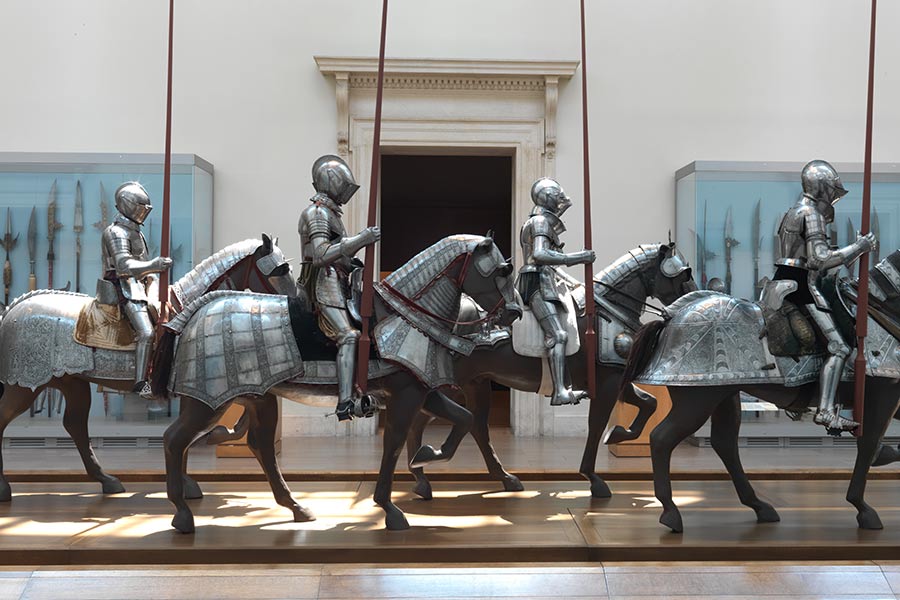
Explore the Arms and Armor Hall at The Metropolitan Museum of Art in New York, United States, featuring a world-class collection of historical weapons and armor.
<h2>Overview</h2><p>Stepping into the Arms and Armor Hall at The Metropolitan Museum of Art in New York, United States, is like journeying through centuries of human ingenuity and conflict. This globally renowned collection, housed within one of the world's largest art museums, showcases an extraordinary array of weaponry and protective gear from diverse cultures and eras. It's consistently one of the Met's most popular attractions, captivating visitors with its dramatic displays and the sheer artistry of its objects.</p><p>The collection spans from prehistory to the late 19th century, featuring over 14,000 objects. More than a thousand of these are on permanent display in the Ronald S. Lauder Galleries of Arms and Armor, located in The John Pierpont Morgan Wing. Here, you'll find everything from full suits of European parade armor, meticulously crafted Japanese samurai ensembles, and intricate Middle Eastern arms, to early American firearms. The focus is not merely on military function but on the outstanding craftsmanship and decorative beauty that elevate these objects to true works of art.</p><h2>History & Cultural Background</h2><p>The foundation of The Met's Arms and Armor Department is a story of passionate collectors and visionary curators. While the museum received its first examples of arms and armor in 1896, the collection truly began to take shape with the significant purchase of European arms and armor from Maurice de Talleyrand-Périgord, duc de Dino, in 1904.</p><p>This pivotal acquisition, coupled with a substantial group of Japanese arms and armor, propelled the Met's collection to international recognition and led to the establishment of a separate Department of Arms and Armor in 1912. This department remains the only one of its kind in the United States. Its founding curator, Dr. Bashford Dean, played a crucial role in building its esteemed holdings, even inspiring a generation of American collectors to donate their prized pieces.</p><p>Over the decades, the collection expanded significantly through gifts and bequests, including the 2,000-piece Henry Riggs collection and George Cameron Stone's 3,000 pieces of Asian armor. These acquisitions have resulted in one of the most comprehensive and encyclopedic collections of its kind globally.</p><h2>What Makes It Special</h2><p>What sets the Arms and Armor Hall apart is its unparalleled scope and the artistic quality of its artifacts. Unlike dynastic armories in Europe that often reflect a single royal lineage, the Met's collection is a modern aggregation built from diverse sources, offering a truly global perspective. It features the most comprehensive collection of Japanese arms and armor outside Japan, and an extensive selection of European pieces, particularly from the Renaissance and Baroque periods.</p><p>Visitors can marvel at magnificent Renaissance parade armors, some of which were made for Tudor courtiers or figures like King Henry II of France, showcasing intricate low-relief work and exquisite detail. The collection includes masterpieces such as a helmet dated 1543 by Filippo Negroli, one of the finest Milanese armorers of the 16th century. The sheer diversity, spanning Greek bronze cuirasses to 19th-century American firearms, makes it an extraordinary study in both military history and decorative arts.</p><h2>Stories, Fun Facts & Local Details</h2><p>The main hall is designed to evoke a medieval castle, immediately transporting visitors to another time. Hanging flags representing the Knights of the Round Table enhance this immersive experience. A particular highlight for many is the dramatic display of four armored equestrian figures, poised as if galloping into a joust. This vivid presentation brings the historical context to life, sparking the imagination of young and old alike.</p><p>Many pieces were not solely for combat but served as symbols of power, prestige, and pageantry, often used in ceremonies or tournaments. The artistry involved in their creation — from detailed engraving to intricate metalwork — highlights the smiths as artists in their own right. The Met's conservators prioritize preserving the 'patina' and marks of age on these objects, ensuring their historical integrity is maintained for future generations. Recent significant additions include a promised gift of 91 objects from Ronald S. Lauder, further enriching the European arms and armor holdings.</p><h2>Visitor Perspective</h2><p>The Arms and Armor Hall consistently ranks as one of the most engaging and memorable sections of The Met. Many visitors describe being awestruck by the beautiful detail and the scale of the pieces. It's an experience that encourages a deeper appreciation for the artistry and craftsmanship of different cultures. The galleries are well-organized, dividing the collection by period and culture, allowing for a coherent exploration of military implements and their evolution.</p><p>Whether you're a history enthusiast, an art lover, or simply a curious traveler, the hall offers a captivating journey. It's often cited as a 'reward' after exploring other galleries, providing a dynamic and imaginative counterpoint to traditional art forms. The display of armor on horseback, in particular, creates a powerful, almost living impression, allowing visitors to visualize the individuals who once wore these formidable creations.</p>
Location
Coordinates: -73.963402, 40.779434
View on Google Maps