Van Gogh's Self-Portrait
Paris, France

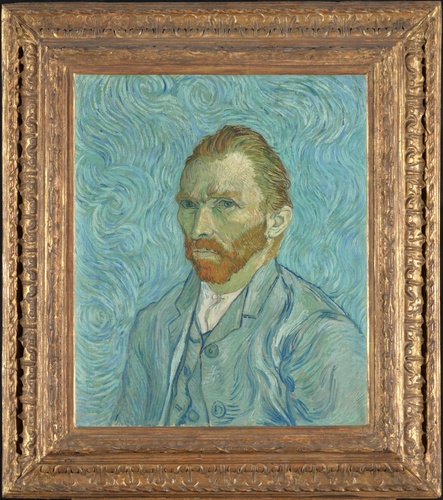
Discover Van Gogh's intense 'Self-Portrait' at the Musée d'Orsay in Paris, France. Explore its history, unique style, and emotional depth.
<h2>Overview</h2> <p>Nestled on the Left Bank of the Seine in Paris, the magnificent Musée d'Orsay, housed within a former Beaux-Arts railway station, is a treasure trove of Impressionist and Post-Impressionist masterpieces. Among its world-renowned collection, one artwork stands out for its raw intensity and profound introspection: Vincent van Gogh's 'Self-Portrait'. This iconic painting offers a deeply personal glimpse into the soul of one of art history's most celebrated, yet troubled, figures. Visitors to the Musée d'Orsay are drawn to this piece, experiencing a direct connection with the artist's enduring legacy.</p> <p>The museum itself, originally the Gare d'Orsay, was built between 1898 and 1900 for the 1900 Exposition Universelle. It transitioned into a museum in 1986, becoming home to French art created between 1848 and 1914.</p> <h2>History & Cultural Background</h2> <p>Vincent van Gogh painted this particular 'Self-Portrait' in September 1889, during a pivotal period of his life. He was residing at the asylum in Saint-Rémy-de-Provence, France, just a year before his untimely death. This artwork is considered by some art historians to be one of his final self-portraits, a deeply reflective piece from a time of intense personal struggle. Van Gogh created over 30 self-portraits throughout his artistic career, primarily between 1886 and 1889. His prolific self-portraiture was not born of vanity, but rather out of necessity and a profound desire for self-exploration.</p> <p>During his time in Paris (1886–1888), Van Gogh often lacked the financial means to hire professional models. Painting himself provided a readily available and inexpensive subject for practice, allowing him to continuously hone his skills in capturing human form and emotion. These self-portraits also served as a visual diary, documenting his evolving artistic style and internal states. He explicitly sought 'a deeper likeness than that obtained by a photographer,' striving to reveal his inner world rather than just his external appearance. The 'Self-Portrait' at Musée d'Orsay was later gifted to the museum in 1949 by Paul and Marguerite Gachet, the children of Dr. Gachet, a close acquaintance of Van Gogh.</p> <h2>What Makes It Special</h2> <p>What sets Van Gogh's 'Self-Portrait' apart is its remarkable ability to convey profound emotion through revolutionary artistic techniques. The painting features a head-and-shoulders view of the artist, clad in a suit rather than his typical working pea jacket. His features appear hard and emaciated, with eyes that seem both intransigent and anxious, drawing the viewer's attention directly to his intense gaze.</p> <p>The masterful use of color is a defining characteristic; a dominant palette of absinthe green and pale turquoise in the background finds a striking counterpoint in the fiery orange of his beard and hair. This vibrant contrast is not merely aesthetic but serves to amplify the painting's emotional resonance. The apparent immobility of Van Gogh's figure is juxtaposed with the undulating, 'hallucinatory arabesques' of the background and his hair and beard, creating a sense of turbulent energy that mirrors the artist's inner turmoil. This dynamic interplay of color, line, and texture provides a powerful insight into the Post-Impressionist movement and Van Gogh's unique contribution to it.</p> <h2>Stories, Fun Facts & Local Details</h2> <p>Van Gogh's self-portraits are a captivating series, each offering a unique snapshot of his personality and artistic journey. He once wrote to his brother, 'People say, and I am willing to believe it, that it is hard to know yourself. But it is not easy to paint yourself, either.' This quote perfectly encapsulates the introspective struggle evident in his self-portraits. Some art critics have speculated that the patterns of the brushstrokes and the somber colors in this particular 'Self-Portrait' hint at the immense mental, physical, and emotional pressure Van Gogh was experiencing at the time it was painted.</p> <p>A fascinating aspect of his self-portraits is the common theory that Van Gogh painted them by looking into a mirror. This would mean that what appears as his right side in the painting was, in reality, the left side of his face. This detail adds another layer to understanding his perspective and process. The Musée d'Orsay, where this masterpiece resides, is also home to other significant works by Van Gogh, including 'Starry Night over the Rhône' and 'The Church at Auvers-sur-Oise', allowing visitors to explore the breadth of his extraordinary talent within a single visit.</p> <h2>Visitor Perspective</h2> <p>For a traveler visiting the Musée d'Orsay in Paris, encountering Van Gogh's 'Self-Portrait' is often a deeply moving experience. The painting is typically displayed within the museum's Post-Impressionist galleries, a space dedicated to the innovative artists who followed in the wake of Impressionism. Many visitors find themselves captivated by the intensity of Van Gogh's gaze and the vibrant, almost unsettling, energy of the brushstrokes. It feels less like a mere portrait and more like a direct communication from the artist himself, transcending time and space.</p> <p>To fully appreciate the 'Self-Portrait,' consider spending a few extra moments observing the intricate details: the swirling background that seems to hum with an inner life, the delicate balance of contrasting colors, and the undeniable emotional depth in his eyes. While photography without flash is generally permitted within the museum, the true magic lies in simply standing before the artwork, allowing its story and emotion to wash over you. Visiting early in the day or during off-peak hours can enhance this intimate experience, allowing for a quieter moment of contemplation with this profound work of art.</p>
Location
Coordinates: 2.326561, 48.859962
View on Google Maps