Upper Gallery
Istanbul, Turkey

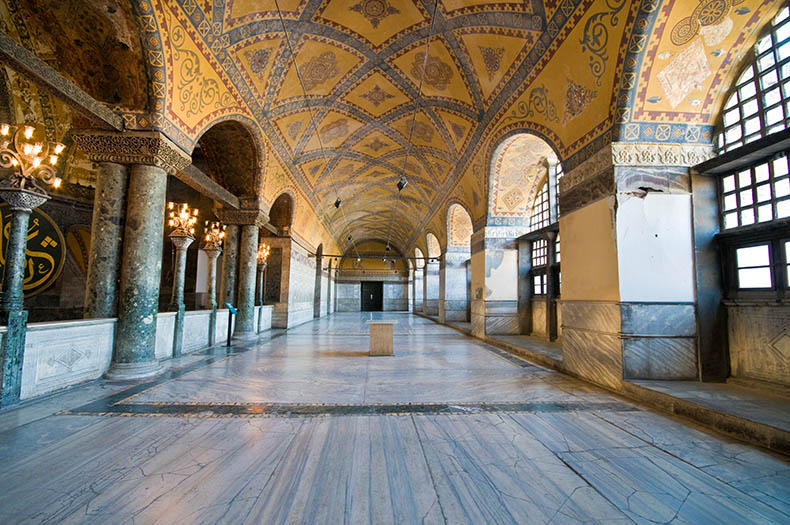
Explore the historic Upper Gallery of Hagia Sophia in Istanbul, Turkey, to discover ancient Byzantine mosaics and breathtaking panoramic views.
<h2>Overview</h2><p>Perched high above the expansive main hall of the Hagia Sophia in Istanbul, Turkey, the Upper Gallery offers a distinct and invaluable perspective on this architectural marvel. It provides visitors with elevated, sweeping views of the grand dome and the intricate interior below, revealing details often missed from the ground floor. Access to this historic level is typically via a gentle, ancient ramp, adding to the sense of stepping back in time. The Upper Gallery is a dedicated area for tourists, allowing a closer look at some of the Hagia Sophia's most celebrated Byzantine mosaics and offering a quieter, more reflective experience than the bustling ground level.</p><h2>History & Cultural Background</h2><p>The Hagia Sophia, meaning 'Holy Wisdom', was originally consecrated as a Christian cathedral in 537 AD under the Byzantine Emperor Justinian I, serving as the seat of the Eastern Orthodox Church for nearly a millennium. It was a place of immense spiritual and imperial significance, where emperors were crowned and major religious ceremonies unfolded. During this Byzantine era, the Upper Gallery held a particularly distinguished role. It was traditionally reserved for the empress and members of the imperial court, offering them an exclusive vantage point to observe the grand liturgies unfolding in the nave below. After the Ottoman conquest of Constantinople in 1453, the structure was converted into a mosque, and many Christian mosaics were covered or plastered over. However, many significant figurative mosaics, dating primarily from the 9th to 13th centuries, survived and have been painstakingly uncovered and restored, most notably within this Upper Gallery. In 1935, Hagia Sophia became a museum, showcasing both its Christian and Islamic heritage, before being reconverted into an active mosque in 2020.</p><h2>What Makes It Special</h2><p>The Upper Gallery is a treasure trove of historical and artistic significance. Its most renowned feature is the collection of Byzantine mosaics, considered among the finest surviving examples of sacred art from the Eastern Roman Empire. Here, you can encounter the poignant 'Deesis' mosaic, depicting Christ Pantocrator flanked by the Virgin Mary and John the Baptist, known for its emotional depth and intricate detail. Other celebrated mosaics include portraits of Emperor Constantine IX Monomachos and Empress Zoe, and the Komnenian mosaic featuring Emperor John II Komnenos, his wife Irene, and their son Alexios. Beyond these captivating artworks, the gallery provides a truly unparalleled panoramic view of the Hagia Sophia's colossal main dome, which appears to float weightlessly above, and the vastness of the interior space. Visitors can also explore the 'Empress' Loggia', the specific area once reserved for the imperial family, and marvel at intricate architectural details like carved marble railings and ancient columns. Another intriguing feature is the 'Marble Door', sometimes referred to as the 'Gate of Heaven and Hell', a significant historical passage used during Byzantine synods, as well as a rare Viking inscription.</p><h2>Stories, Fun Facts & Local Details</h2><p>Visiting the Upper Gallery is like peeling back layers of history, with each corner holding a story. One popular legend surrounding the 'Deesis' mosaic suggests that the eyes of Christ, Mary, and John the Baptist seem to follow you, regardless of your position in the gallery, adding a mystical aura to the artwork. The presence of ancient columns, some weighing nearly 70 tons and sourced from across the Mediterranean, highlights the extraordinary engineering feats of its original builders. Interestingly, the Hagia Sophia originally boasted 104 columns in total, with 64 of them located in the upper gallery. The ascent to this upper level is via a wide, gently sloping ramp rather than stairs, a design choice believed to have been made to accommodate horses and carriages used by Byzantine royalty. The gallery's very existence speaks to the complex interplay of religious and imperial power throughout Byzantium, with its mosaics often reflecting the changing political and religious landscape. Experiencing the Upper Gallery allows one to connect with these narratives and witness the delicate balance of faiths that have shaped this iconic structure.</p><h2>Visitor Perspective</h2><p>For any traveler to Hagia Sophia, dedicating time to the Upper Gallery is highly recommended for a comprehensive understanding of the site. It offers a unique vantage point to appreciate the architectural grandeur and the intricate mosaics without the ground-level crowds. Foreign visitors currently require a paid ticket to access the Upper Gallery, which helps in the maintenance of this ancient structure. When planning your visit, remember that Hagia Sophia is an active mosque, so respectful dress is required; women should cover their heads, shoulders, and knees. To ensure a more serene experience, it is advisable to visit early in the morning or later in the afternoon, avoiding peak prayer times. Photography is permitted, but flash photography is generally discouraged to preserve the delicate artworks and respect worshippers. An exploration of the Upper Gallery can take approximately 1.5 to 2 hours, allowing ample time to absorb the history and beauty it offers.</p>
Location
Coordinates: 28.980261, 41.008469
View on Google Maps