The Underwater Cavern Network
Cancún, Mexico

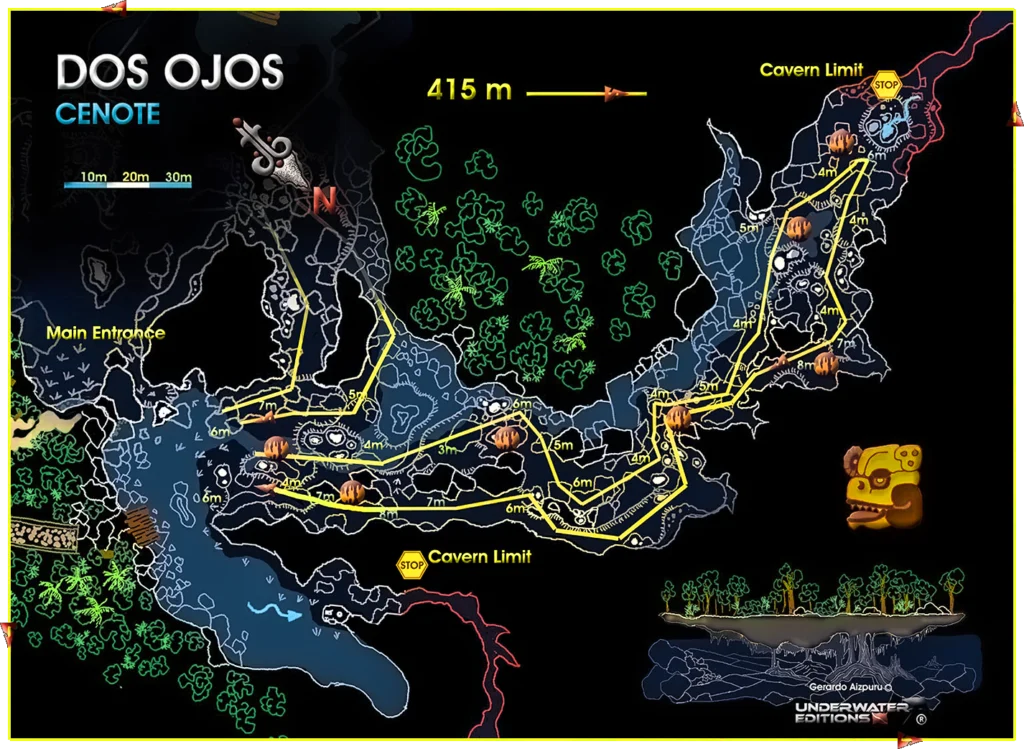
Explore The Underwater Cavern Network within Cenote Dos Ojos, Cancún, Mexico. Discover ancient Mayan history, stunning formations, and crystal-clear waters.
<h2>Overview</h2><p>Deep within the lush jungle near Cancún, Mexico, lies a natural marvel known as Cenote Dos Ojos. Its name, meaning 'Two Eyes' in Spanish, refers to the two main sinkholes that resemble a pair of eyes gazing into the Earth. These 'eyes' serve as entrances to 'The Underwater Cavern Network', a spectacular subterranean world of interconnected passages and crystal-clear freshwater. Part of the larger Sistema Sac Actun, this network is recognized as one of the longest underwater cave systems on the planet, making it a truly significant geological wonder. The cenote is an ideal destination for those seeking to immerse themselves in unique natural beauty, offering unparalleled opportunities for both snorkeling and cavern diving.</p><h2>History & Cultural Background</h2><p>Cenotes like Dos Ojos are not merely geological formations; they hold profound historical and cultural significance for the ancient Maya civilization. For the Maya, these natural sinkholes were considered sacred gateways to Xibalba, the mythical underworld, connecting the physical realm with the spiritual. They served as vital sources of freshwater in the Yucatán Peninsula, a region notably devoid of surface rivers. Beyond sustenance, cenotes were central to Mayan life, used for ritualistic ceremonies, offerings to gods—especially Chaac, the god of rain—and as places of worship. Archaeological explorations within cenotes have uncovered invaluable insights, including prehistoric human remains and ancient artifacts, painting a vivid picture of the region's deep past. While cenotes have existed for millennia, the extensive exploration of Dos Ojos by divers began in the late 20th century, with its official discovery dating back to 1987.</p><h2>What Makes It Special</h2><p>The Underwater Cavern Network of Cenote Dos Ojos stands out for several extraordinary features. Geologically, it showcases breathtaking formations of stalactites, stalagmites, and columns, sculpted over millennia by mineral-rich water. The water itself is exceptionally clear, filtered naturally through the porous limestone, offering visibility that can extend up to 400 feet, creating an illusion of endless space. As sunlight penetrates the openings, it creates ethereal beams of light that dance through the water, illuminating the majestic underwater landscape in shades of turquoise and sapphire. A distinctive highlight is the 'Bat Cave', an air-filled dome accessible to visitors where bats can be seen resting above the water's surface, adding a touch of unique wildlife to the experience. Moreover, its connection to the Sistema Sac Actun places it within the world's longest known underwater cave system, a fact that underscores its immense scale and geological importance. The water maintains a comfortable temperature of 24 to 25 degrees Celsius (75-77 degrees Fahrenheit) throughout the year, making exploration pleasant in any season.</p><h2>Stories, Fun Facts & Local Details</h2><p>The name 'Dos Ojos' itself, translating to 'Two Eyes', is a charming local detail derived from the appearance of its twin sinkholes. Within this captivating network, one of the famous diving routes is playfully known as the 'Barbie Line'. This route earned its name because a Barbie doll is attached to the guide line at its midway point, serving as a quirky marker for divers. The stunning natural beauty and unique geological formations of Cenote Dos Ojos have attracted filmmakers, leading to its feature in prominent productions. It has appeared in the 2002 IMAX film 'Journey Into Amazing Caves', the BBC/Discovery Channel series 'Planet Earth', and even parts of the 2005 Hollywood movie 'The Cave'. Beyond its visual allure, the cenote serves as a crucial site for scientific research, with stalactites and stalagmites offering natural climate archives that provide insights into thousands of years of Earth's climate history. Discoveries here also inform our understanding of ancient human activities in the region.</p><h2>Visitor Perspective</h2><p>Cenote Dos Ojos offers an unforgettable experience for a wide range of visitors, from casual snorkelers to experienced divers. The cavern dives are considered suitable for beginners with Open Water certification, as they are typically shallow (maximum 10 meters/33 feet), well-lit, and feature permanent guide lines for safety. Many visitors describe the experience as surreal and magical, with the interplay of light and shadow creating an otherworldly atmosphere. The excellent visibility ensures that every detail of the underwater scenery, including diverse rock formations and occasional aquatic life, is clearly visible. While exploring the caverns, divers often find the spaces wide and open, mitigating concerns about claustrophobia. Guided tours are highly recommended to navigate the complex network and fully appreciate its wonders. Whether swimming, snorkeling, or diving, a visit to 'The Underwater Cavern Network' promises a profound connection with nature and a glimpse into a hidden world of ancient beauty.</p>
Location
Coordinates: -87.39194, 20.32472
View on Google Maps