The Grand Central Hall
Paris, France

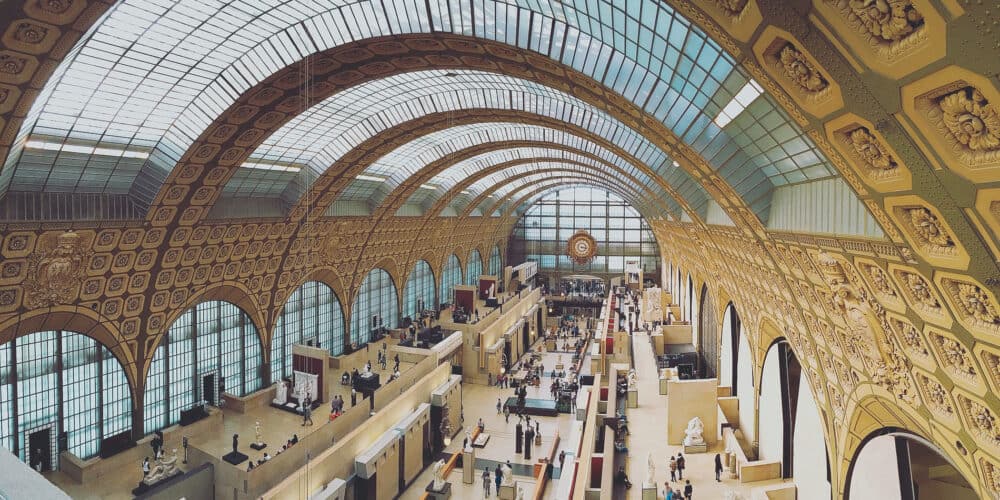
Explore the majestic Grand Central Hall inside the Musée d'Orsay in Paris, France. Discover its history as a Beaux-Arts railway station and its stunning transformation into an art museum.
<h2>Overview</h2><p>Stepping into the Grand Central Hall of the Musée d'Orsay in Paris, France, is an experience that immediately transports you. This majestic space, often referred to as the central nave, is far more than just an entryway; it is the beating heart of one of the world's most beloved art museums. Bathed in natural light filtering through its colossal glass roof, the hall serves as a breathtaking introduction to the museum's Impressionist and Post-Impressionist masterpieces. The immense scale, soaring ceilings, and the iconic clock visible from within create a dramatic backdrop for the art, offering a unique blend of industrial grandeur and artistic elegance.</p><p>Originally built as a bustling railway station, the Gare d'Orsay, the Grand Central Hall retains much of its original architectural splendor, now repurposed to celebrate art rather than facilitate travel. Its transformation from a transport hub to a cultural sanctuary makes it a symbol of architectural innovation and adaptive reuse. Visitors are invited to wander through this grand space, appreciating not only the masterpieces on display but also the remarkable structure that houses them.</p><h2>History & Cultural Background</h2><p>The story of the Grand Central Hall begins in the late 19th century. Commissioned for the 1900 Universal Exhibition, the Gare d'Orsay was designed by architect Victor Laloux to be a modern railway station and an adjacent luxury hotel, serving as the terminus for the Chemin de Fer de Paris à Orléans railway company. Laloux skillfully blended Beaux-Arts grandeur with innovative industrial techniques, concealing a metal framework beneath an elegant limestone facade to harmonize with its prestigious Parisian surroundings, particularly the Louvre across the Seine.</p><p>Despite its state-of-the-art features, including electric rails and passenger elevators, the station's platforms soon became too short for longer, modern trains, leading to its decline in mainline traffic by 1939. After years of varied uses, including a postal sorting office, a reception center for prisoners of war, and even a film set for Orson Welles' 'The Trial', the building faced potential demolition. However, in the 1970s, a visionary initiative led to its classification as a historical monument and its eventual transformation into a museum. Italian architect Gae Aulenti was entrusted with the interior design, preserving the station's vast, barrel-vaulted space while creating a complex layout of galleries across three main levels, artfully integrating the original structure with the needs of a modern art museum. The Musée d'Orsay officially opened its doors in December 1986.</p><h2>What Makes It Special</h2><p>What truly sets the Grand Central Hall apart is its audacious fusion of purpose and design. The colossal barrel-vaulted glass roof, originally designed to shelter train tracks and passengers, now floods the central nave with an ethereal, natural light, creating an unparalleled environment for viewing art. This architectural marvel, incorporating vast quantities of metal and glass, was a triumph of Belle Époque engineering, allowing for immense, unobstructed interior spaces.</p><p>The scale of the hall is simply breathtaking, extending from the former train platforms—now the ground floor's extensive sculpture collection area—up to the majestic arched ceiling. One of its most iconic features is the monumental clock, originally an external element, now visible from within the museum, offering a unique perspective of the Seine and the city through its transparent face. This dramatic window to Paris perfectly encapsulates the museum's blend of history, architecture, and art, making the hall a destination in itself.</p><h2>Stories, Fun Facts & Local Details</h2><p>The Grand Central Hall holds numerous fascinating tales from its past lives. During its railway days, the station was hailed as a masterpiece of modernism and industry. It even contained an adjacent 400-room hotel, boasting luxurious amenities for its time, such as private bathrooms in almost all rooms.</p><p>A notable fun fact is about the famous clock itself. While a symbol of the museum, the large clock face on the building's exterior, when viewed from the inside on the upper levels, offers an incredible panoramic vista of the Parisian skyline, including the Tuileries Garden and the Louvre, a delightful surprise for many visitors. The building's versatility allowed it to host diverse events before its museum era, from being a backdrop for movies to serving as an auction house. Its survival and transformation are a testament to the appreciation of architectural heritage and adaptive reuse, proving that a space can gracefully evolve while retaining its soul.</p><h2>Visitor Perspective</h2><p>For the traveler, the Grand Central Hall is typically the first awe-inspiring impression upon entering the Musée d'Orsay. Its sheer volume and the luminous atmosphere immediately prepare visitors for a journey through artistic brilliance. The hall acts as a natural focal point, drawing the eye upwards to the impressive ceiling and the large, captivating clock. Its layout naturally guides visitors, with the surrounding stone structures, formerly train platforms, now delineating gallery spaces for sculptures and decorative arts.</p><p>Many find themselves lingering in this central area, taking photographs, or simply absorbing the grandeur of the surroundings before delving into the more intimate galleries. The blend of the museum's artistic treasures with the building's historical integrity creates a rich, multilayered experience that is both intellectually stimulating and emotionally resonant. It's a place where the past conversations of travelers and the present dialogue with art beautifully converge.</p>
Location
Coordinates: 2.326561, 48.859962
View on Google Maps