The Dome of the Pantocrator
Istanbul, Turkey

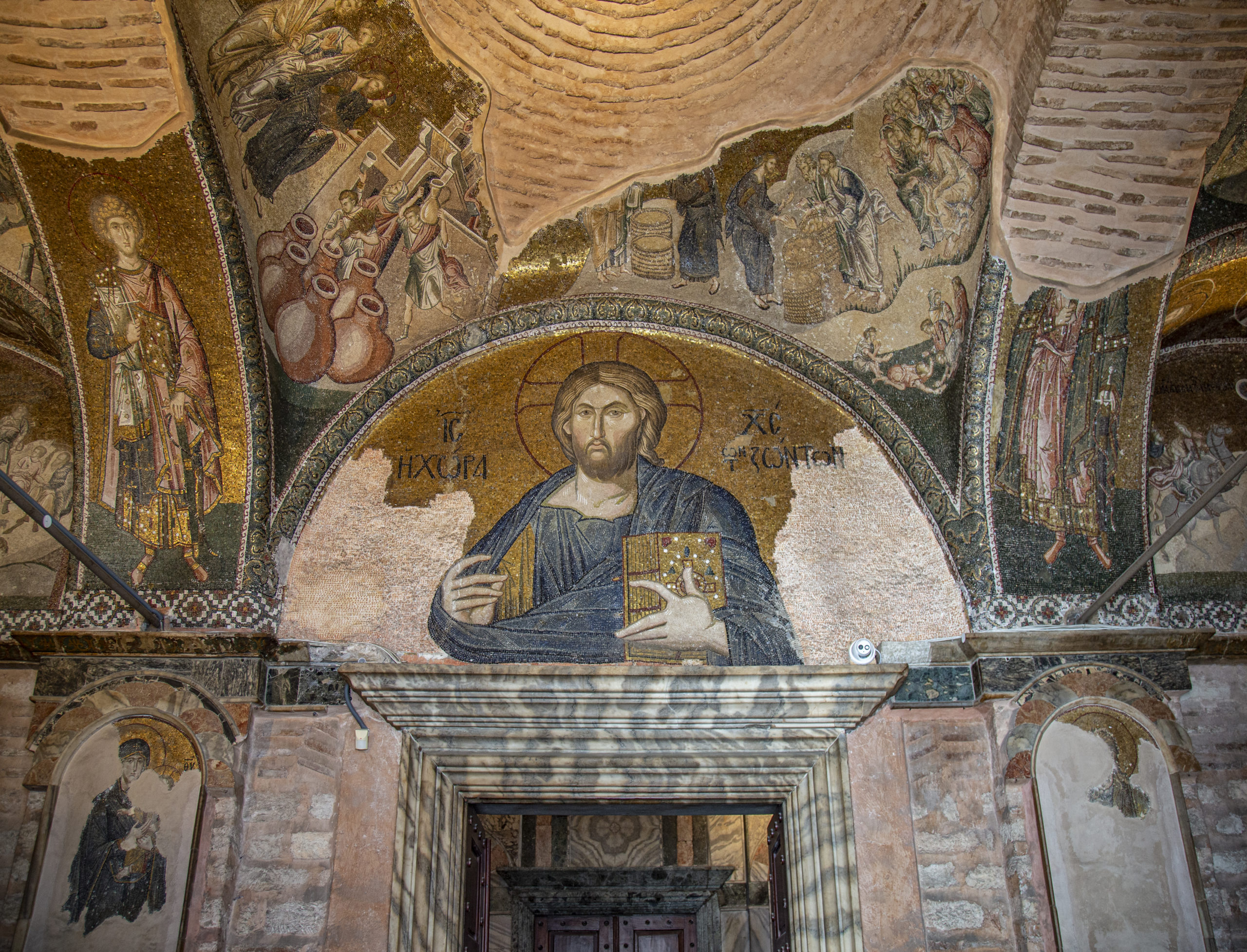
Explore the breathtaking Dome of the Pantocrator in Istanbul's Chora Church. Discover exquisite Byzantine mosaics and rich history in this Turkish masterpiece.
<h2>Overview</h2><p>Nestled within the historic Fatih district of Istanbul, Turkey, the Chora Church, known today as Kariye Mosque, holds an unparalleled treasure of Byzantine art. Among its most profound and evocative elements is 'The Dome of the Pantocrator,' a striking depiction of Christ Almighty. This sacred space, often referred to as the 'Sistine Chapel of Istanbul,' is renowned for its extraordinarily well-preserved mosaics and frescoes, offering a vibrant window into the artistic and spiritual zenith of the Late Byzantine period.</p><p>Originally built as a church in a monastery complex outside the city walls of Constantinople, its name 'Chora,' meaning 'in the countryside' or 'land,' took on profound symbolic significance in its later iconography. Over centuries, it transitioned from a church to a mosque, then a museum, and has recently been reconverted into a mosque, yet its artistic legacy continues to captivate visitors with its intricate biblical narratives and masterful craftsmanship.</p><h2>History & Cultural Background</h2><p>The origins of the Chora Church date back to the early 4th century, when it was established as part of a monastery beyond Constantinople's original fortifications. The name 'Chora' or 'countryside' stuck even after the city walls expanded, enclosing the complex within the urban fabric. This name later inspired symbolic interpretations within the church's artwork, with Christ being referred to as 'The Land of the Living' and Mary as 'The Container of the Uncontainable'.</p><p>The structure we admire today largely owes its form to a major rebuilding effort in the 11th century by Maria Doukaina, mother-in-law of Emperor Alexios I Komnenos, followed by further reconstruction in the early 12th century by Isaac Komnenos. However, it was the powerful Byzantine statesman and scholar Theodore Metochites who, between 1315 and 1321, financed and oversaw the comprehensive artistic decoration that transformed the church into the masterpiece it is today.</p><p>Metochites' ambitious project ushered in a period often called the Palaeologian Renaissance, showcasing a renewed interest in classical forms and expressive narrative. After the Ottoman conquest of Constantinople in 1453, the church was converted into a mosque, known as Kariye Camii, in the early 16th century by Hadım Ali Pasha. During this conversion, the exquisite mosaics and frescoes were covered with a layer of plaster due to Islamic aniconism, a practice that inadvertently preserved them for centuries. In 1945, it became a museum, and extensive restoration work was carried out from 1948 to 1959, uncovering the stunning artwork. The building reverted to its mosque status in 2020, reopening to visitors in 2024.</p><h2>What Makes It Special</h2><p>The Chora Church's Dome of the Pantocrator stands as a profound testament to Late Byzantine artistry. 'Pantocrator,' meaning 'Almighty' or 'Ruler of the Universe,' is a common depiction of Christ in Orthodox iconography, yet the one here possesses a unique spiritual gravitas. This mosaic, particularly the one found in the lunette above the doorway between the outer and inner narthexes, presents a bust-length Christ, serene yet powerful, blessing the viewer with his right hand and holding a jeweled Gospel book in his left.</p><p>The intricate detail and vivid use of gold tesserae create a dazzling effect, illuminating the space with a divine glow. Beyond this prominent depiction, the inner narthex features two remarkable 'pumpkin domes' (named for their fluted shape), one dedicated to Christ and his ancestors, and the other to the Virgin Mary and her lineage. These genealogical mosaics, alongside extensive narrative cycles depicting the life of the Virgin and the infancy and public ministry of Christ, transform the church's interior into a visual sermon. The artistry exhibits a remarkable depth, movement, and plastic quality, pushing the boundaries of Byzantine painting and reflecting a period of artistic revival.</p><h2>Stories, Fun Facts & Local Details</h2><ul><li>The name 'Chora' itself is a fun fact, given its dual meaning: literally 'countryside,' but symbolically interpreted in the mosaics as 'the land of the living' (referring to Christ) and 'the container of the uncontainable' (referring to the Virgin Mary).</li><li>Theodore Metochites, the patron behind the church's stunning decorations, had a fascinating life. He was a chief minister, scholar, and poet who, after a fall from grace and exile, returned to the monastery as a monk and was eventually buried there, in the very chapel he had adorned. A mosaic in the inner narthex famously depicts him kneeling, offering a model of the church to Christ.</li><li>The plastering over of the mosaics and frescoes during the Ottoman era, initially intended to obscure the Christian imagery, paradoxically protected them from natural decay and damage, preserving them in an exceptional state compared to many other Byzantine artworks.</li><li>While many refer to it as Chora Church, locals and official signs often use its Turkish name, Kariye Camii (Kariye Mosque), with 'Kariye' being derived from 'Chora'.</li></ul><h2>Visitor Perspective</h2><p>Visiting the Chora Church, and specifically experiencing the majesty of the Dome of the Pantocrator, is a profound journey into Byzantine history and art. Located in the Edirnekapı neighborhood, slightly off Istanbul's main tourist routes, it requires a bit of planning to reach, often involving a combination of public transport or a taxi.</p><p>As it is now a functioning mosque, visitors should observe a respectful dress code, ensuring shoulders and knees are covered; women may also need to cover their heads. It's advisable to check current opening hours and prayer times, as tourist entry might be paused during congregational prayers. To truly appreciate the rich narratives embedded in the mosaics and frescoes, an audio guide or a knowledgeable human guide is highly recommended, as they bring the complex biblical stories to life. Photography is generally allowed, but flash and tripods are prohibited to protect the delicate artworks. There is an entrance fee for foreign visitors.</p>
Location
Coordinates: 28.9392, 41.0311
View on Google Maps