The Ballroom
London, United Kingdom

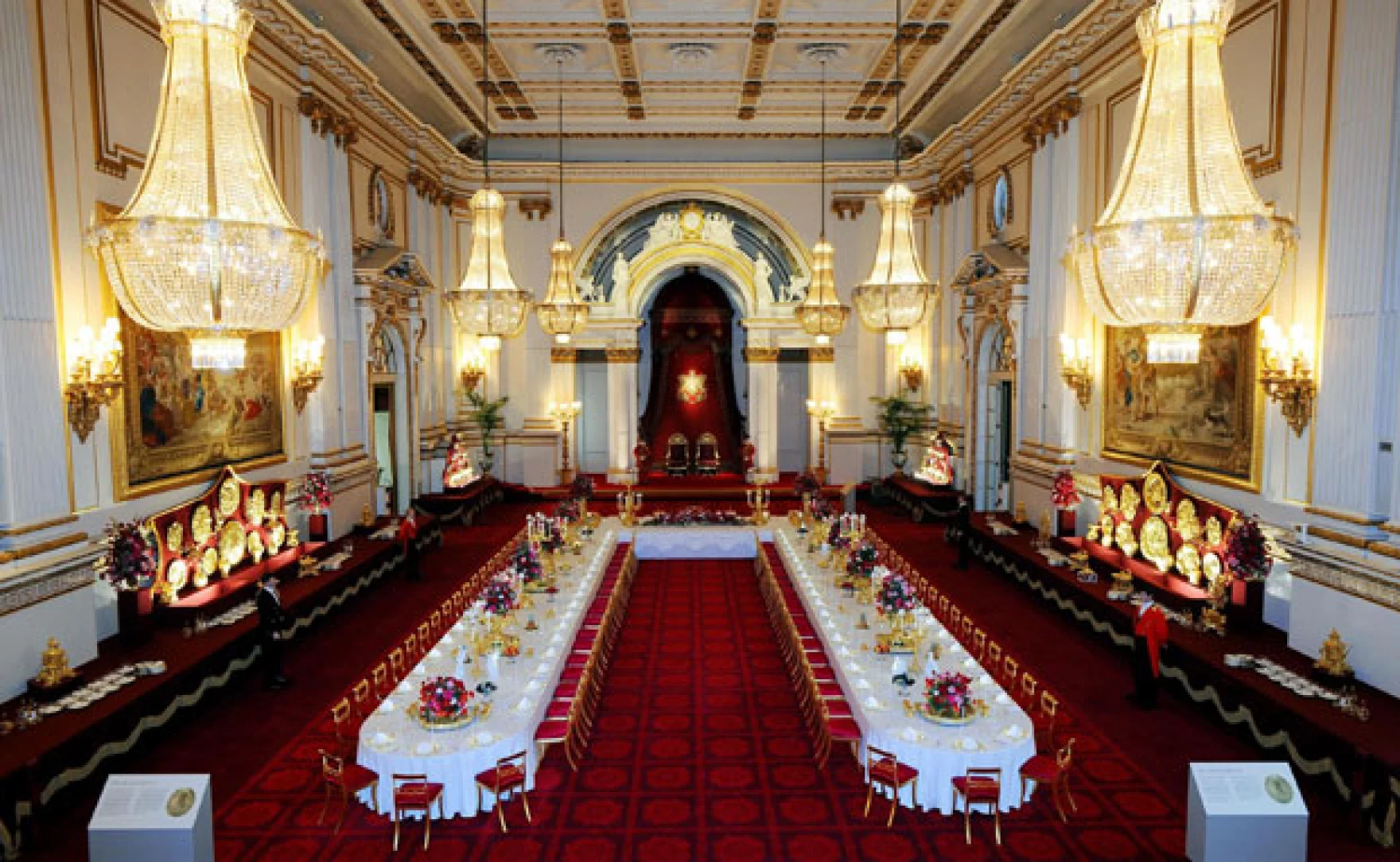
Explore The Ballroom at Buckingham Palace, London, United Kingdom. Discover its rich history, grand architecture, and role in royal events.
<h2>Overview</h2><p>Stepping into The Ballroom at Buckingham Palace in London, United Kingdom, is to enter a space of unparalleled grandeur and historical significance. As the largest of the State Rooms, it is a magnificent testament to British royal pageantry. Completed in 1855 during the reign of Queen Victoria, this immense chamber was originally conceived as the Ball and Concert Room, designed to host lavish celebrations and official gatherings. Today, it remains the primary venue for significant royal events, including prestigious State Banquets, the ceremonial Investitures where honours are bestowed, and a variety of other official functions. Measuring approximately 36.6 meters (120 feet) long, 18 meters (60 feet) wide, and 13.5 meters (45 feet) high, its sheer scale commands attention and reflects its enduring importance within the palace. A notable feature is the musicians' gallery, complete with a grand organ, from where musical accompaniment would have once filled the air during royal events.</p><h2>History & Cultural Background</h2><p>The construction of The Ballroom was a significant undertaking initiated by Queen Victoria and Prince Albert between 1853 and 1855, driven by the need for a larger space to accommodate the growing number of royal receptions and banquets. The esteemed architect Sir James Pennethorne was responsible for its design, crafting a room that perfectly encapsulated the fashionable Italianate style of the period, drawing inspiration from the grand Renaissance palaces found in Rome and Florence. The interior decoration was meticulously overseen by Ludwig Gruner, further enhancing its opulent aesthetic.</p><p>Its architectural style can also be described as Neoclassical, characterized by a harmonious blend of symmetry, monumental grandeur, and classical elements like columns and pilasters. The Ballroom's completion in 1856 coincided with a period of national celebration, marking the end of the Crimean War, and quickly became a symbol of royal festivity. Queen Victoria's passion for music and dance, coupled with Prince Albert's vision for a modern yet traditional space, ensured that The Ballroom was at the forefront of comfort and design, even boasting advanced ventilation and acoustics for its time. This era saw the palace truly transform into a vibrant center for joy, music, and romance, with The Ballroom at its heart.</p><h2>What Makes It Special</h2><p>What truly sets The Ballroom apart is its magnificent scale and intricate detailing, making it the most impressive of all the State Rooms at Buckingham Palace. Its design incorporates a grand scale, a rhythmic series of pilasters, a sculpted frieze, and an expansive barrel-vaulted ceiling that collectively create a majestic and awe-inspiring atmosphere. The ceiling itself is a work of art, adorned with elaborate frescoes that depict either classical mythology or allegorical scenes representing the victories of Arts and Sciences, adding a profound layer of cultural narrative to the space.</p><p>At one end of the room stands an imposing throne dais, beneath a colossal, domed velvet canopy. This spectacular canopy, known as a shamiana or baldachin, was notably used during the Delhi Durbar in 1911 and continues to signify the ultimate seat of royal authority. The Ballroom's lavish appearance is further enhanced by rich materials, including gilded moldings and intricate plasterwork, complemented by extravagant chandeliers, large mirrors, and ornate decorations. Even the flooring, a specially crafted parquet design, contributes to the room's overall grandeur and elegance. During events, a grand piano is often a central feature, providing musical entertainment, and the throne canopy also houses the very chairs used by Queen Elizabeth II and the Duke of Edinburgh during her 1953 coronation, connecting visitors directly to recent royal history.</p><h2>Stories, Fun Facts & Local Details</h2><p>The Ballroom has been the stage for countless historic moments, making it a focal point of British royal history. It hosted the Coronation banquets for both King Edward VII and King George V, grand affairs that set the standard for royal celebration. Beyond formal ceremonies, it has welcomed a diverse array of guests, from diplomatic dignitaries to cultural icons. Famously, The Ballroom was the setting for The Beatles' reception in 1965, a memorable moment that blurred the lines between traditional royalty and modern pop culture. It also witnessed the joyous Wedding Reception of Prince Charles and Lady Diana Spencer in 1981, a globally televised event.</p><p>During Queen Victoria's reign, the ballroom was particularly vibrant, known for magnificent costume balls. Historical accounts mention events like the Plantagenet Ball, where the Queen and Prince Albert appeared dressed as Queen Philippa and Edward III, celebrating England's chivalrous past, and the Stuart Ball, which transported guests back to the seventeenth century. For State Banquets today, the room can comfortably seat up to 170 guests, arranged around a majestic horseshoe-shaped table. Each place setting is exceptionally elaborate, often featuring six pieces of cutlery, six glasses, and fine china, underscoring the formality and prestige of these occasions. More recently, The Ballroom continued its legacy by hosting a State Banquet for Emperor Naruhito and Empress Masako of Japan in June 2025, showcasing its ongoing role in international diplomacy and hospitality.</p><h2>Visitor Perspective</h2><p>For those curious to experience the splendor of The Ballroom firsthand, it forms a central part of the State Rooms at Buckingham Palace, which are open to the public for a limited time each year. Typically, these rooms are accessible for approximately ten weeks during the summer months, usually from July to September or early October, when the monarch is not in residence. Outside of this period, selected dates may offer small-group guided tours, providing a more intimate viewing experience.</p><p>A self-guided tour of the State Rooms, including The Ballroom, usually takes between two to three hours, allowing ample time to absorb the historical details and opulent surroundings. It is important to note that photography is generally not permitted inside the State Rooms, preserving the sanctity and security of these historic spaces; however, photos are often allowed in the palace gardens at the tour's conclusion. To ensure entry, particularly during peak summer openings or for weekend visits, advance booking is highly recommended. Visitors benefit from included audio guides, which provide valuable historical context and highlight intriguing details about the rooms and their contents. The palace is conveniently located and easily accessible via London's underground network, with Victoria, Green Park, and St James's Park stations nearby. Often, combining a visit to the State Rooms with other palace attractions through 'Royal Day Out' tickets offers the best value for a comprehensive royal experience.</p>
Location
Coordinates: -0.140634, 51.501476
View on Google Maps