Temple of Zeus Solymeus
Antalya, Turkey

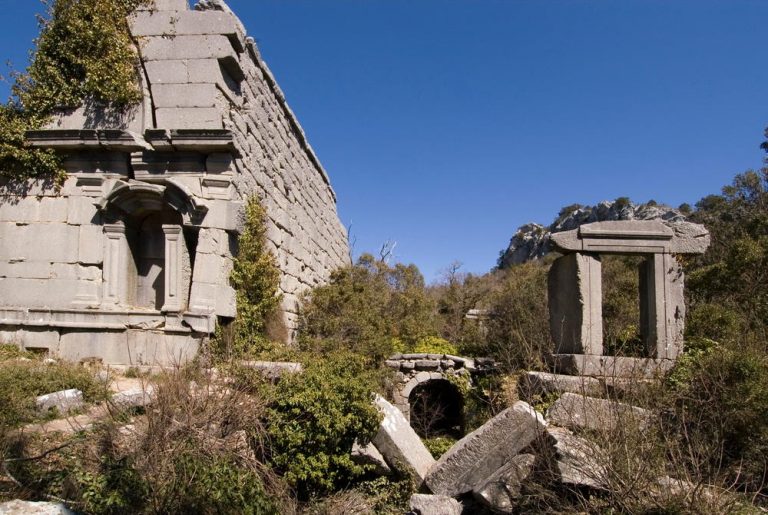
Discover the ancient Temple of Zeus Solymeus in Termessos, Antalya, Turkey. Explore this unconquered Pisidian city, its history, and stunning mountain views.
<h2>Overview</h2><p>Nestled high in the rugged Taurus Mountains, approximately 30 kilometers northwest of Antalya, Turkey, lies the ancient Pisidian city of Termessos, a marvel of history and nature. Within its remarkably preserved ruins stands the Temple of Zeus Solymeus, dedicated to the city's revered patron deity. Termessos is a unique archaeological site, distinguished by its elevated position, often referred to as the 'Eagle's Nest,' at altitudes exceeding 1000 meters on Mountain Solymos, now known as Güllük Dağı. This strategic location not only offered formidable natural defenses but also contributes to the breathtaking scenic beauty of the site today. As one of Turkey's best-preserved ancient cities, Termessos and its surrounding Güllük Mountain-Termessos National Park were added to the UNESCO World Heritage Tentative List in 2000, underscoring its significant historical and cultural value.</p><p>The Temple of Zeus Solymeus is a poignant reminder of the spiritual life that once thrived in this resilient city. Though time has reduced it to remnants, its presence reflects the deep veneration the ancient inhabitants, known as the Solymi, held for their primary god. Visitors today can explore the atmospheric ruins of Termessos, including its famous theater, various temples, and rock-cut necropolis, all set against a backdrop of dense pine forests and panoramic mountain views, offering an unparalleled blend of historical discovery and natural wonder.</p><h2>History & Cultural Background</h2><p>The history of Termessos is as captivating as its mountainous setting. Founded by the Pisidians, a fiercely independent people inhabiting southwestern Anatolia, the city's inhabitants proudly identified themselves as Solymi. The name 'Solymeus' itself is rooted in an ancient Anatolian god who, over time, became synonymous with the Greek god Zeus. This powerful deity, Zeus Solymeus, served as the chief god of Termessos, a fact evidenced by the coins minted in the city which bore his image, often depicting him seated with a helmet and armor.</p><p>Termessos entered the annals of history prominently in 333 BC when it faced the formidable army of Alexander the Great. Despite Alexander's legendary military prowess, Termessos, with its impenetrable natural defenses and the resolve of its people, successfully resisted conquest. This makes Termessos one of the few cities in the region to have repelled Alexander's forces, a testament to its formidable position and the courage of its defenders. Even during the subsequent Roman period, Termessos maintained a remarkable degree of independence, continuing to mint its own coinage and enforce its unique laws. The city's eventual decline is believed to have been triggered by a devastating earthquake that destroyed its vital aqueduct, severing its water supply and ultimately leading to its abandonment.</p><h2>What Makes It Special</h2><p>What truly sets the Temple of Zeus Solymeus and the wider city of Termessos apart is their profound sense of untouched wilderness and historical authenticity. Unlike many other ancient sites that have seen extensive reconstruction or are surrounded by modern development, Termessos remains largely as nature reclaimed it, preserving a rare snapshot of antiquity. Its remote location within a national park means that exploring Termessos is not just a historical visit but an immersive journey into a landscape where ancient stone structures blend seamlessly with a rugged, forested environment.</p><p>The solemn atmosphere of the Temple of Zeus Solymeus, even in its ruined state, evokes a powerful connection to the past spiritual practices of the Solymi. It stands as a silent witness to their devotion to a deity who was both local and universal, an Anatolian god merged with the king of the Greek pantheon. The entire site offers a unique blend of archaeological intrigue and breathtaking natural beauty, providing visitors with a distinct and impressive atmosphere that is often missing from more heavily trafficked historical destinations.</p><h2>Stories, Fun Facts & Local Details</h2><p>The enduring legend of Termessos revolves around its unconquered status against Alexander the Great. It's a fascinating fun fact that this formidable city, nicknamed 'the fortress of the Olympos,' managed to withstand the might of one of history's greatest conquerors, compelling him to abandon his siege. This resilience speaks volumes about the character of the Pisidian people who inhabited it.</p><p>The worship of Zeus Solymeus is a unique cultural detail. While Zeus is widely known as the Greek god of sky and thunder, often depicted with his eagle and lightning bolt, the Termessians' patron deity was a distinct local incarnation. The Solymi, the city's founders, are even mentioned in Homer's Iliad, connecting this ancient site to epic mythology through the legend of Bellerophon. Beyond the Temple of Zeus Solymeus, Termessos is home to several other temples, including one dedicated to Artemis, further illustrating the rich polytheistic traditions of its inhabitants. The practice of carving cisterns directly into the rock by the resourceful Solymi people is another testament to their ingenuity in adapting to their challenging mountainous environment.</p><h2>Visitor Perspective</h2><p>Visiting the Temple of Zeus Solymeus and the ancient city of Termessos is an adventure best suited for the curious and moderately active traveler. The site requires a degree of hiking, as the trails, while generally clear, ascend through mountainous terrain and might present challenges for very young children or those with mobility issues. It's advisable to set aside three to four hours to fully explore the extensive ruins and absorb the panoramic views.</p><p>The ideal times to visit are during the spring (April to June) and autumn (September to November), when the weather is most favorable for hiking and exploration. Termessos is accessible by car or taxi from Antalya, located approximately 30-34 kilometers away. While there's no direct public transport to the ruins, the journey through Güllük Mountain-Termessos National Park is part of the experience. An admission fee is collected at the park entrance. Upon arrival, visitors will find a general map near the parking lot, though there is no English audio guide or detailed map. Beyond the Temple of Zeus Solymeus, highlights include the impressively situated theater offering breathtaking views of the Pamphylian plain, the grand necropolis with its rock-cut tombs, the gymnasium, Roman baths, and the agora, all contributing to an unforgettable journey back in time.</p>
Location
Coordinates: 30.4588, 36.9762
View on Google Maps