Temple of the Frescoes
Cancún, Mexico

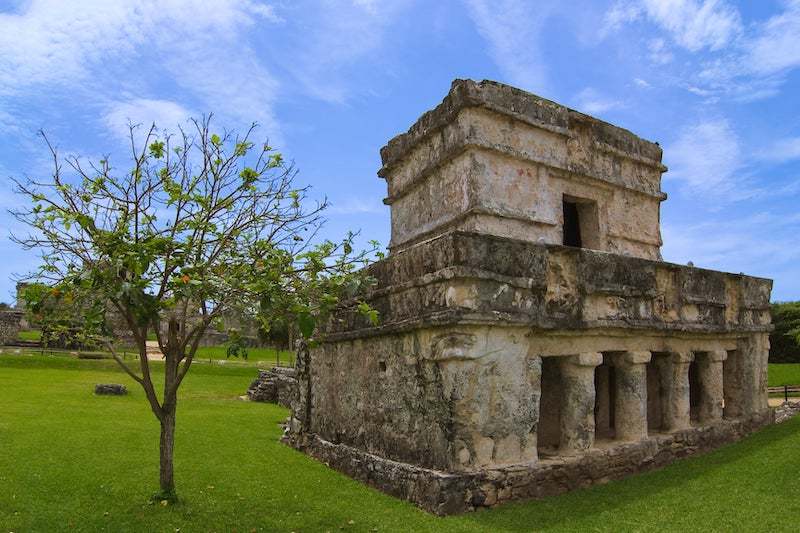
Discover the Temple of the Frescoes, a highlight of Tulum Ruins in Cancún, Mexico, known for its ancient Mayan murals and astronomical significance.
<h2>Overview</h2><p>Nestled within the breathtaking Tulum Ruins on Mexico's Caribbean coast, the Temple of the Frescoes stands as a captivating testament to ancient Mayan artistry and spiritual devotion. This remarkable structure, dating back to the Late Postclassic period (around the 13th to 15th centuries), offers a unique window into the rich cultural and religious life of its builders. While many Mayan ruins impress with sheer scale, the Temple of the Frescoes captivates with its intricate details and profound symbolism.</p><p>Unlike the grand ceremonial centers of other Mayan cities, Tulum was a thriving walled port city, strategically positioned atop 12-meter cliffs overlooking the turquoise Caribbean Sea. The Temple of the Frescoes, though not the largest building in the site, held immense importance, serving not only as a religious sanctuary but also as an astronomical observatory. Its faded yet enduring murals are considered among the best-preserved examples of Mayan wall painting from this era, providing invaluable insights into their cosmology and daily rituals.</p><h2>History & Cultural Background</h2><p>The ancient city of Tulum, originally known as Zamá, meaning 'City of Dawn' or 'Sunrise', flourished between 1200 and 1500 CE. It was one of the last Mayan cities to be built and inhabited, maintaining its vitality as a significant trading port, particularly for obsidian and turquoise, well into the 16th century, even after the initial Spanish contact. The city's strategic location, protected by natural cliffs and a formidable wall, made it an ideal hub for both land and sea trade routes.</p><p>The Temple of the Frescoes was constructed during Tulum's zenith, reflecting the advanced knowledge and sophisticated belief systems of the Late Postclassic Maya. Its construction was multi-faceted, combining religious significance with precise astronomical functions. Mayan priests used the temple's careful alignment to track celestial events, including the movements of the sun, solstices, and equinoxes. This astronomical understanding was crucial for agricultural planning, guiding religious ceremonies, and interpreting divine favor.</p><h2>What Makes It Special</h2><p>The true marvel of the Temple of the Frescoes lies in its namesake: the remarkably well-preserved murals that adorn its interior and exterior. These frescoes are some of the most complete and best-preserved examples of Late Postclassic Mayan painting. The artwork, characterized by vibrant reds, blues, and blacks, depicts a rich tapestry of Mayan mythology, featuring deities, supernatural beings, and cosmological symbols. Scholars note the impressive control of lines and handling of color, indicative of a high level of artistic skill.</p><p>A recurring figure within these frescoes and stucco decorations is the 'Descending God', also known as the 'Diving God' or 'Bee God'. This iconic deity is often depicted headfirst, as if descending from the heavens, symbolizing fertility, rain, and renewal. The temple itself is a two-story structure. The first floor features two rooms with four monolithic columns and niches that once held figures of the Descending God and other deities. The upper story, a smaller sanctuary, reportedly bears ancient red handprints and was primarily used for sacred astronomical observations.</p><h2>Stories, Fun Facts & Local Details</h2><p>The Temple of the Frescoes offers more than just ancient art; it tells a story of an evolving spiritual landscape. Beneath the visible murals, traces of older paintings suggest that the temple underwent several phases of artistic and architectural development over generations. The intention of the artists was not just to record, but to immerse, with some interpretations suggesting the paintings were designed to represent the Caribbean Sea itself, reflecting the natural surroundings and the Maya's deep connection to their environment.</p><p>The stylistic similarities of some murals to the Mixteca-Puebla style, originating in highland Mexico, hint at the extensive trade networks and cultural exchange that characterized Tulum as a bustling port city. Although visitors today can no longer enter the inner sanctum to protect the delicate frescoes, peering into the doorway allows a glimpse of the artistic mastery and the powerful narratives held within. The stucco masks, possibly representing the creator god Itzamná, that once adorned the frieze corners add another layer of mythological depth to this already profound site.</p><h2>Visitor Perspective</h2><p>Approaching the Temple of the Frescoes, one is struck by its intimate scale compared to the imposing El Castillo nearby. Yet, its human scale contributes to a feeling of deep connection to the ancient inhabitants. The temple's position within the Tulum Archaeological Zone allows for stunning views, harmonizing Mayan architecture with the vibrant natural beauty of the Riviera Maya. Imagine the Mayan priests studying the celestial alignments from its upper level, their understanding of the cosmos deeply integrated into their daily lives and spiritual practices.</p><p>While you cannot physically step inside the most delicate areas, the opportunity to view the intricate details from the outside, combined with the temple's historical context, provides a powerful and reflective experience. It's a reminder of the Maya's sophisticated artistic capabilities, their profound reverence for the natural world, and their advanced astronomical knowledge. The Temple of the Frescoes stands not just as a ruin, but as a silent storyteller, its faded colors and weathered stones whispering tales of a civilization that saw no divide between earth and sky, art and ritual.</p>
Location
Coordinates: -87.430588, 20.214788
View on Google Maps