Statues of Giants
Bangkok, Thailand

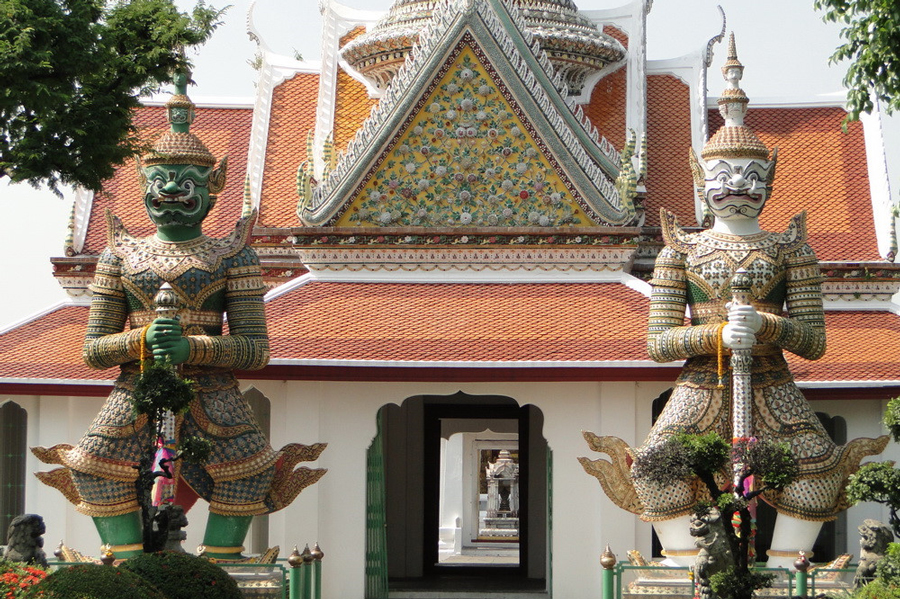
Discover the colossal Statues of Giants at Wat Arun, Bangkok, Thailand. Learn their Ramakien origins, cultural role, and protective symbolism as temple guardians.
<h2>Overview</h2><p>As you approach the sacred ordination hall (ubosot) within Bangkok's iconic Wat Arun, also known as the Temple of Dawn, your gaze is immediately drawn to a pair of colossal figures standing sentinel. These are the revered Statues of Giants, formidable guardians known locally as 'Phaya Yak' or Yaksha. Positioned at the eastern gate of the ubosot, they greet every visitor with their imposing presence, serving as silent protectors of the temple's spiritual heart. Their vibrant colours and intricate details make them an unforgettable sight, setting the tone for the profound cultural and religious experience that awaits within this historic Thai landmark.</p><h2>History & Cultural Background</h2><p>These majestic giants are deeply rooted in Thai culture and Buddhist mythology, drawing their origin from the Ramakien, Thailand's national epic, which is a version of the Indian Ramayana. The two primary figures guarding the entrance to Wat Arun's ubosot are named Thotsakan and Sahatsadecha. Thotsakan, identifiable by his striking green skin, is the Thai name for Ravana, the powerful demon king and primary antagonist in the Ramakien. Despite his role as an antagonist in the epic, within the temple context, Thotsakan assumes a sacred, protective role.</p><p>Standing opposite Thotsakan is Sahatsadecha, depicted with white skin. In the Ramakien, Sahatsadecha is described as a mighty ruler with a thousand heads and two thousand arms, who fought alongside Thotsakan against Rama and his monkey army. These Yaksha figures symbolize strength, vigilance, and the balance between chaos and order. Their presence as temple guardians originates from ancient Indian Hindu and Buddhist cosmology, where Yakshas were powerful nature spirits and protectors of sacred places and wealth. As these beliefs spread into Southeast Asia, they were adapted into Thai folklore as fearsome yet benevolent guardians, marking the boundary between the earthly and spiritual realms.</p><h2>What Makes It Special</h2><p>The Statues of Giants at Wat Arun are not merely stone figures; they are masterpieces of Thai artistry and spiritual symbolism. Each giant stands over six meters tall, making their scale truly awe-inspiring. They are adorned with vibrant colours and intricate mosaic patterns composed of countless tiny ceramic tiles and porcelain shards, which shimmer spectacularly under the Bangkok sun. This meticulous decoration reflects the unique artistic style of the Ratanakosin period, often incorporating materials once used as ballast by Chinese trading ships.</p><p>Their fearsome expressions, powerful stances, and elaborate costumes are meticulously crafted, embodying their role as protectors. They hold formidable clubs, reinforcing their guardianship over the temple's sacred spaces. Beyond their visual splendor, their significance lies in their ability to evoke a sense of reverence and protection, serving as a tangible link to Thailand's rich mythological heritage and its deep connection to both Hindu and Buddhist traditions.</p><h2>Stories, Fun Facts & Local Details</h2><p>One popular local legend connects the giants of Wat Arun with those of the nearby Wat Pho. The story goes that the giant from Wat Pho borrowed money from his friend at Wat Arun. When the time came to repay the debt, the Wat Pho giant refused, leading to a fierce battle between the two. Their epic struggle was so violent that the ground shook, and the area between the two temples was flattened, leading to the name 'Tha Tian,' meaning 'flattened pier,' for the ferry terminal on the river. To end the destruction, the god Shiva intervened, turning both giants into stone as punishment.</p><p>While this is a folk tale, it adds a layer of enchantment to the historical figures. Today, locals and visitors sometimes pay their respects to these guardians, believing they offer safety, protection, and good fortune. The giants at Wat Arun are considered among the first pair of demons from the Ratanakosin period and served as prototypes for similar guardian figures in other temples, including the Temple of the Emerald Buddha.</p><h2>Visitor Perspective</h2><p>Encountering the Statues of Giants at Wat Arun is an integral part of the temple experience. Their sheer size and detailed craftsmanship command attention, inspiring both wonder and respect. As you pass between them to enter the ordination hall, you can't help but feel a sense of entering a truly sacred space, protected by these eternal sentinels. Their presence encourages visitors to pause, appreciate the intricate artwork, and ponder the ancient stories they represent. It's a moment that connects you to the spiritual depth and rich narrative tapestry of Thailand. Remember to approach these revered figures and the temple grounds with the respect befitting a sacred site, observing modest dress and a peaceful demeanor.</p>
Location
Coordinates: 100.48889, 13.74361
View on Google Maps