Spur at 30th Street
New York, United States

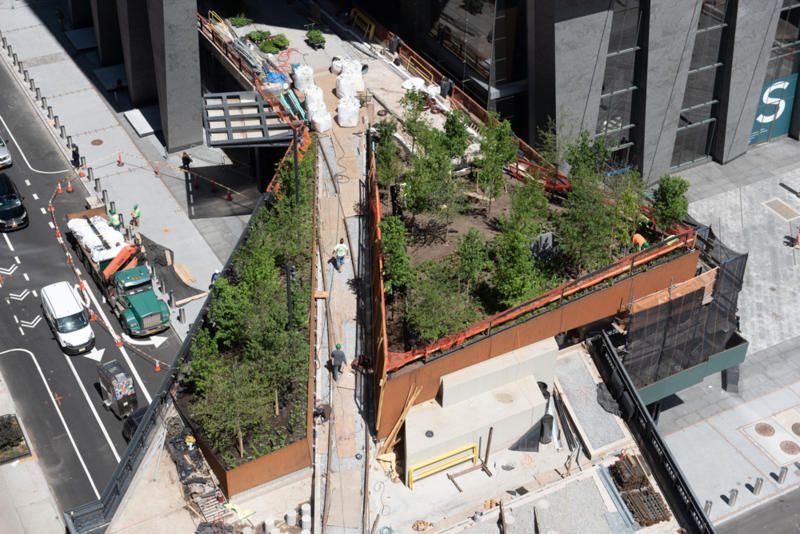
Explore the Spur at 30th Street on New York's High Line, a unique urban park offering art, panoramic views, and historical insights in the United States.
<h2>Overview</h2><p>The Spur at 30th Street, often simply referred to as The Spur, is a captivating extension of New York City's renowned High Line, an elevated urban park in Manhattan. Unveiled to the public in June 2019, this distinctive section is located at the intersection of 30th Street and 10th Avenue and stands out as the widest segment of the entire High Line. It serves as a vibrant public square, offering visitors not only a unique vantage point of the city but also a dedicated space for large-scale art installations, various programming, and community events. [2, 4, 8]</p><p>Designed by the celebrated team behind the High Line's earlier phases—James Corner Field Operations, Diller Scofidio + Renfro, and planting designer Piet Oudolf—The Spur seamlessly integrates industrial aesthetics with a lush, naturalistic landscape. [2, 3] It comprises several notable features, including the elegant Coach Passage, an array of artfully tilted planters, and a spacious piazza furnished with cascading wooden seating. This area provides ample room for leisurely strolls, quiet contemplation, and engaging with the urban environment from an elevated perspective. [2, 3, 4, 8]</p><h2>History & Cultural Background</h2><p>The High Line itself, and by extension The Spur, traces its origins back to the bustling industrial era of Manhattan. Originally constructed in 1934, it was part of the New York Central Railroad's West Side Line, an elevated freight rail track built to lift dangerous train traffic off the street level. This measure was crucial in a period when 10th Avenue was notoriously known as 'Death Avenue' due to numerous accidents involving ground-level trains. [16, 17] The Spur specifically functioned as a vital connection, carrying mail and packages directly to and from the upper floors of the massive Morgan Processing and Distribution Center. [5, 8]</p><p>However, with the decline of rail freight, the line fell into disuse, with the last train, reportedly carrying frozen turkeys, running in 1980. [16, 17] For nearly two decades, the elevated structure lay dormant, becoming an overgrown relic amidst the urban landscape. It was the visionary efforts of local residents Joshua David and Robert Hammond, who founded Friends of the High Line in 1999, that spearheaded a grassroots movement to preserve and transform this industrial artifact into a public park. [1, 9, 13] A dedicated 'Save the Spur' campaign in 2008 was instrumental in ensuring this particular section was integrated into the park's master plan rather than being demolished, preserving a crucial piece of New York's industrial heritage. [8]</p><h2>What Makes It Special</h2><p>The Spur distinguishes itself within the High Line for several unique elements. Foremost among these is 'The Plinth,' a designated platform for monumental, rotating contemporary art installations. This feature has become a significant draw, showcasing thought-provoking artworks that engage with the urban surroundings. Simone Leigh's 'Brick House' was the inaugural, striking sculpture to grace this space. [2, 4, 8]</p><p>Its generous width provides an expansive public piazza, a rarity in densely packed Manhattan, allowing for diverse programming and events that activate the space. The design, while distinctly modern, pays homage to its railway past through the integration of preserved rail tracks and materials like Cor-Ten steel and aluminum. [2, 3] Lush gardens, inspired by the wild flora that reclaimed the abandoned tracks, feature over 8,500 perennials and dozens of tree and shrub species, creating a rich, naturalistic environment. [2, 8] The architectural marvel of the Coach Passage, a vaulted walkway beneath the Coach headquarters, offers an intriguing threshold with planted balconies that provide unique perspectives of the city and the High Line itself. [2, 4, 8] Furthermore, the recent addition of the Moynihan Connector in June 2023 has significantly enhanced access, seamlessly linking The Spur to Moynihan Train Hall, further cementing its role as a key urban nexus. [1, 6, 8]</p><h2>Stories, Fun Facts & Local Details</h2><p>The inspiration for The Spur's vibrant plantings comes directly from the self-seeded wilderness that flourished on the abandoned railway tracks. Landscape designer Piet Oudolf meticulously cultivated this 'wild' aesthetic, resulting in a dynamic garden that changes with the seasons and embodies a 'less is more' approach to engaging with the surrounding urban context. [2, 3, 16, 17] This commitment to rewilding an industrial space tells a powerful story of nature's resilience and adaptability within the heart of a metropolis.</p><p>A fascinating detail for visitors is the deliberate preservation of original rail tracks in certain areas of The Spur, allowing a tangible connection to its past as a working freight line. [2, 3] The recent Moynihan Connector, linking The Spur to Moynihan Train Hall, showcases innovative engineering with its Woodlands Bridge, featuring deep soil beds that allow a canopy of trees to flourish above street level, and the Timber Bridge, a sustainably sourced Warren truss design. [1, 6] The High Line's transformative success, of which The Spur is a prominent part, has inspired numerous cities worldwide to re-envision their own disused infrastructure as public green spaces, creating a global legacy of urban renewal. [1, 9]</p><h2>Visitor Perspective</h2><p>For the curious traveler, The Spur at 30th Street offers an enriching and accessible experience. As one of the main entry points to the High Line, it is well-equipped with both stairs and elevators, ensuring accessibility for all. [11, 13] The expansive piazza and ample wooden seating provide perfect spots to pause, people-watch, or simply take in the panoramic views of the cityscape, including the architectural wonders of Hudson Yards. [2, 3, 5] New restrooms and spaces for events make it a comfortable and convenient destination. [3, 4, 8]</p><p>Visiting The Spur allows for an intimate engagement with art through 'The Plinth's' rotating installations, transforming the park into an open-air gallery. The careful blend of rugged industrial elements and meticulously curated natural plantings encourages a contemplative walk, where one can appreciate the layers of New York's history and its ongoing evolution. It's a place designed to offer a fresh perspective on the city, inviting visitors to experience its dynamic energy from a serene, elevated vantage point. [5]</p>
Location
Coordinates: -74.005, 40.7483
View on Google Maps