Six Minarets
Istanbul, Turkey

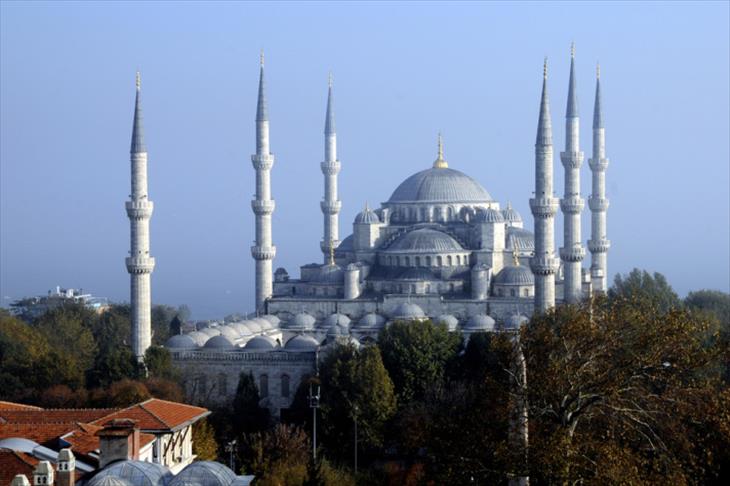
Explore the Six Minarets of Istanbul's Blue Mosque (Sultan Ahmed Mosque), a rare architectural marvel steeped in Ottoman history and unique cultural stories.
<h2>Overview</h2><p>Stepping into Istanbul's historic Sultanahmet Square, one cannot help but be captivated by the majestic silhouette of the Sultan Ahmed Mosque, universally known as the Blue Mosque. Its six towering minarets pierce the sky, creating a distinctive landmark that has defined the city's skyline for centuries. These elegant, pencil-shaped towers are not merely architectural adornments; they are a defining feature that tells a unique story of ambition, devotion, and a fascinating historical anecdote. The six minarets are an integral part of this grand imperial mosque, which stands as a masterpiece of Ottoman architecture and a symbol of Istanbul's rich cultural heritage.</p><h2>History & Cultural Background</h2><p>The construction of the Blue Mosque, officially called the Sultan Ahmed Mosque, was commissioned by the young Ottoman Sultan Ahmed I. He began this ambitious project in 1609, driven by a desire to build a mosque that would rival and even surpass the grandeur of the nearby Hagia Sophia, which had been converted into an imperial mosque by the Ottomans. The mosque's design was entrusted to the royal architect Sedefkar Mehmet Aga, a student of the legendary Mimar Sinan, and the construction was completed in 1616.</p><p>The decision to build a mosque with six minarets was highly unusual and, at the time, generated considerable controversy. Historically, only the Masjid al-Haram in Mecca, the holiest site in Islam, possessed six minarets. Building another mosque with an equal number was seen by some as an act of hubris or an attempt to rival the sacred Ka'aba. To resolve this delicate issue and demonstrate his deep respect, Sultan Ahmed I funded the construction of a seventh minaret for the mosque in Mecca, thus ensuring that the holiest site maintained its unique distinction.</p><h2>What Makes It Special</h2><p>The six minarets of the Blue Mosque are indeed what make it exceptionally special and a rare architectural marvel. While most imperial mosques typically featured one, two, or four minarets, the Blue Mosque's sextet immediately sets it apart. Four of these impressive minarets stand tall at each corner of the mosque, each adorned with three balconies. The remaining two, slightly shorter, are located at the ends of the front courtyard, each featuring two balconies. All minarets boast fluted shafts and stalactite corbels, showcasing exquisite Ottoman craftsmanship.</p><p>This architectural choice not only contributed to the mosque's imposing and elegant silhouette but also underscored Sultan Ahmed I's aspiration for a truly magnificent structure. The blend of traditional Islamic architecture with elements inspired by Byzantine design, particularly from Hagia Sophia, is evident in the mosque's overall structure, but the minarets remain a distinguishing feature. Inside, the mosque earns its popular name from the more than 20,000 handmade Iznik tiles, predominantly in shades of blue, that adorn its walls and domes, creating a breathtaking and ethereal atmosphere.</p><h2>Stories, Fun Facts & Local Details</h2><p>One of the most captivating stories surrounding the six minarets involves a legendary misunderstanding. Folklore suggests that Sultan Ahmed I requested 'altın minareler' (golden minarets), but his architect, due to a phonetic similarity in Turkish, misheard it as 'altı minareler' (six minarets). Whether this tale is apocryphal or rooted in truth, it certainly adds to the mosque's mystique and highlights the unforeseen outcome of its design.</p><p>Beyond the legend, the historical fact remains that the Blue Mosque was one of the first mosques in the Ottoman Empire and one of very few in Turkey to feature six minarets. This bold architectural statement firmly established the mosque's prominence and the Sultan's vision. Even today, the presence of these numerous minarets continues to be a point of fascination and a testament to the mosque's unique place in Islamic art and architecture. The minarets, traditionally used by the muezzin to call the faithful to prayer, still resonate with the spiritual rhythm of the city.</p><h2>Visitor Perspective</h2><p>For visitors, the sight of the Blue Mosque's six minarets rising against the Istanbul sky is often their first and most lasting impression. Approaching the mosque, these slender towers guide the eye towards the grand domes and intricate facade, preparing one for the architectural wonders within. It stands as a vibrant, active mosque, welcoming worshippers and curious travelers from around the globe.</p><p>Being a UNESCO World Heritage site, the Blue Mosque, with its iconic minarets, offers a profound journey into Ottoman history, art, and faith. Experiencing its exterior grandeur and then stepping inside to witness the serene blue tilework after removing one's shoes and covering one's head, is a humbling and inspiring cultural encounter. The minarets serve as constant reminders of the mosque's historical significance and its enduring role as a beacon of Islamic art and a focal point of Istanbul's magnificent cityscape.</p>
Location
Coordinates: 28.977114, 41.005745
View on Google Maps