Royal Chapel
Versailles, France

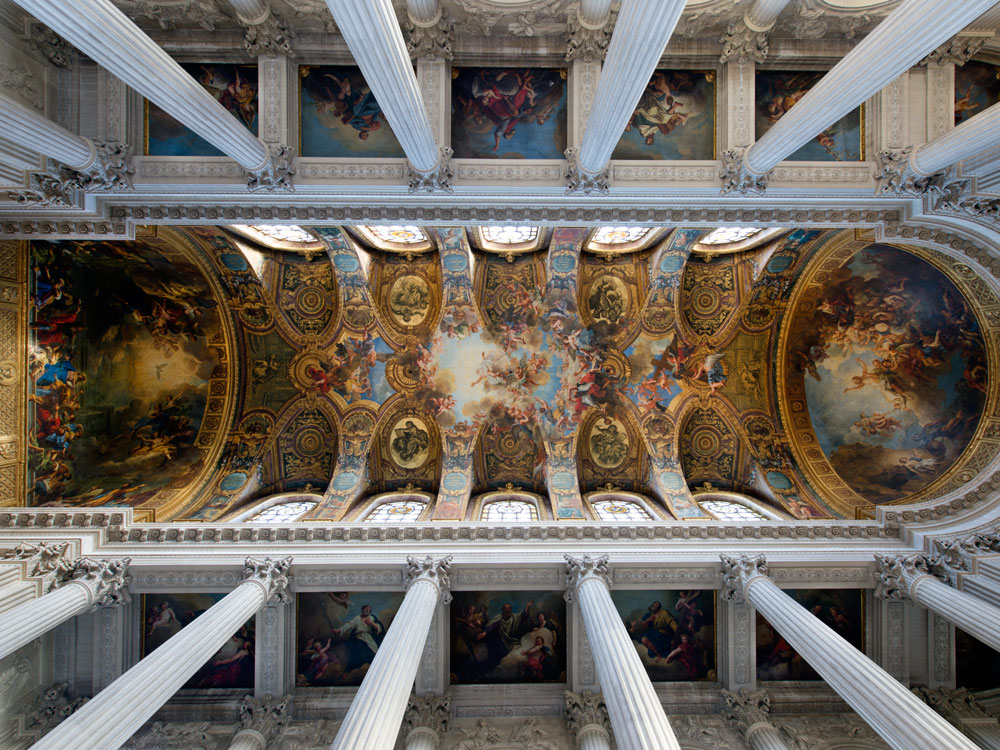
Explore the Royal Chapel at the Palace of Versailles, France. Discover its rich history, Baroque architecture, and royal ceremonies.
<h2>Overview</h2><p>Nestled within the majestic Palace of Versailles in Versailles, France, the Royal Chapel stands as a breathtaking testament to the artistic and spiritual grandeur of the French monarchy. Completed in 1710, it was the final major architectural undertaking of King Louis XIV's reign, making it a pivotal piece of the palace's history. Its soaring structure, distinguished by a ridge reaching 40 meters high, immediately captures attention amidst the surrounding royal buildings. This sacred space, dedicated to Saint Louis, the patron saint of the Bourbons, is a harmonious blend of Baroque and classical architectural elements, featuring striking Gothic-inspired windows and buttresses. A visit to the Royal Chapel offers a profound glimpse into the spiritual life and artistic aspirations that defined the Sun King's era.</p><h2>History & Cultural Background</h2><p>The Royal Chapel at Versailles holds a rich history, being the fifth and final chapel built within the palace since the time of Louis XIII. The journey to its creation was extensive, with its design officially announced in 1682, though construction only commenced in 1699. The visionary architect Jules Hardouin-Mansart presented the plans to the King, but he passed away in 1708 before its completion. The final stages were meticulously overseen by his brother-in-law, Robert de Cotte. From its inauguration in 1710 until 1789, the chapel served as the spiritual heart of the court, hosting daily masses where the King would sit in the royal tribune with his family, while court ladies occupied lateral tribunes and the public and officers were in the nave. Beyond daily worship, it was the venue for significant royal ceremonies, including baptisms, and the solemn marriages of royal children. Louis XIV's deliberate choice to make the chapel higher than other palace buildings was a powerful symbol, evoking the principle of divine right monarchy and reminding all of the spiritual source of his temporal power.</p><h2>What Makes It Special</h2><p>The Royal Chapel is renowned for its exceptional artistry and architectural innovation. Its design beautifully marries traditional palatine chapel layouts with a grand, two-story elevation and an imposing colonnade on the first floor, overtly inspired by Antiquity. The interior is a symphony of opulence: the floor is intricately inlaid with polychrome marble, and the walls are adorned with stunning bas-relief sculptures. A truly captivating feature is the vaulted ceiling, designed by Hardouin-Mansart without transverse ribs to create a unified surface for magnificent paintings. These include Antoine Coypel's 'God the Father in his Glory' in the center, Charles de La Fosse's 'The Resurrection' in the apse, and Jean Jouvenet's 'The Descent of the Holy Ghost' above the royal tribune. The exterior is equally elaborate, crowned by no fewer than 30 statues by 16 different sculptors, depicting major Christian figures and allegories of Christian virtues. This masterful integration of art and architecture establishes the Royal Chapel as a pinnacle of French Baroque design and sacred art.</p><h2>Stories, Fun Facts & Local Details</h2><ul><li>The Royal Chapel cost over two million French livres, with more than half dedicated to its breathtaking decoration, highlighting the immense value placed on this sacred space.</li><li>Its dedication to Saint Louis, and its architectural echoes of the Sainte-Chapelle in Paris, underscored a deliberate connection to revered French royal and religious heritage.</li><li>The chapel was the setting for momentous historical events, including the marriage of the future King Louis XVI and Marie-Antoinette in 1770, a union that would dramatically shape French history.</li><li>Beneath the high altar, a crowned monogram of interlaced double 'L' serves as a symbolic tribute to both Saint Louis and Louis XIV, subtly weaving royal lineage into the chapel's sacred space.</li><li>The chapel's organ, designed by Clicquot and played by renowned musicians like François Couperin, was celebrated throughout Europe, filling the chapel with motets during services.</li></ul><h2>Visitor Perspective</h2><p>For visitors today, the Royal Chapel remains an awe-inspiring space, offering an intimate connection to the grandeur of French history and artistry. Walking through its majestic doors, one is immediately struck by the sheer scale, the intricate details, and the luminous quality of the interior, much as visitors were centuries ago. While some areas are occasionally closed for preservation, the chapel is generally accessible with a Palace ticket. Its sacred dimension continues to make it an ideal venue for performances of 17th and 18th-century sacred music, allowing contemporary visitors to experience its acoustic splendor as it once was. Many find it to be one of the most divine spaces within the palace, a place where the confluence of art, power, and faith creates an unforgettable impression on every curious traveler.</p>
Location
Coordinates: 2.121782, 48.804722
View on Google Maps