Queen’s Hamlet
Versailles, France

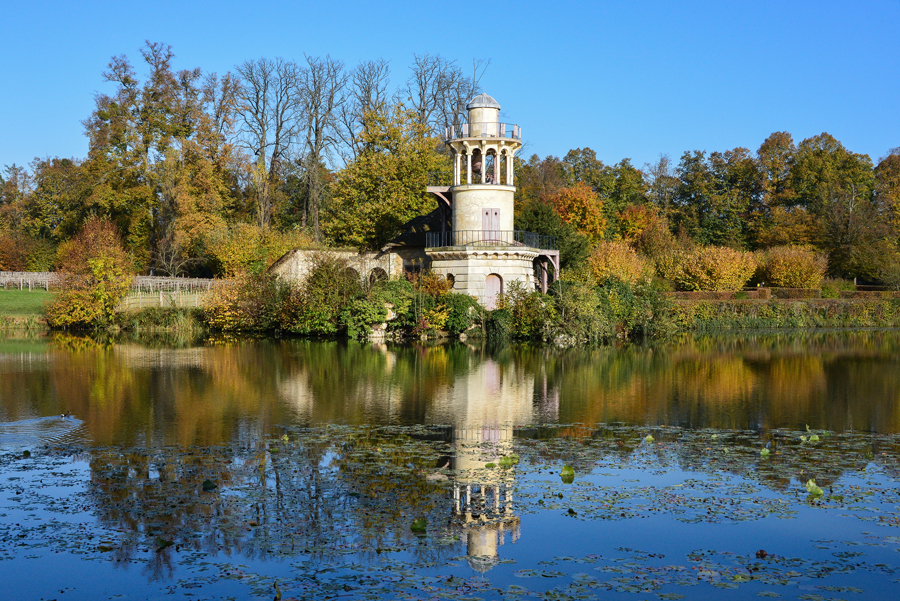
Explore the Queen's Hamlet, Marie Antoinette's rustic retreat within the Palace of Versailles, France. Discover its history, unique charm, and picturesque setting.
<h2>Overview</h2><p>Nestled within the vast and opulent grounds of the Palace of Versailles in Versailles, France, lies a charming and unexpectedly rustic retreat known as the Queen's Hamlet (Hameau de la Reine). This picturesque ensemble of cottages and farm buildings, set around an artificial lake, served as a personal sanctuary for Queen Marie Antoinette, offering a stark contrast to the grandeur of the main palace. Designed as an idealized rural village, the Hamlet provided the Queen with a place of leisure, intimacy, and a connection to a simpler, natural lifestyle.</p><p>It is an essential part of the Estate of Trianon and stands as a testament to the late 18th-century European fascination with nature and pastoral life. Visitors today can explore its unique architectural blend and serene landscapes, gaining insight into a more personal side of the infamous queen.</p><h2>History & Cultural Background</h2><p>The Queen's Hamlet was commissioned by Marie Antoinette in 1783, primarily built between 1783 and 1786. Following her receipt of the Petit Trianon from Louis XVI, the Queen sought to extend its gardens, creating a space where she could escape the rigid etiquette and political pressures of court life at Versailles. The Hamlet's design was entrusted to Richard Mique, the Queen's favored architect, who worked with painter Hubert Robert to realize this unique vision.</p><p>Its creation was influenced by the philosophical currents of the Enlightenment, particularly Jean-Jacques Rousseau's ideals of returning to nature, and the physiocrats' emphasis on agriculture. It also drew inspiration from other model farms and rustic retreats popular among the aristocracy, such as the Hameau de Chantilly. After the French Revolution, the Hamlet was abandoned and fell into disrepair due to its fragile construction and association with the monarchy. However, it underwent significant restoration efforts, notably under Napoleon I for Empress Marie-Louise, and further campaigns in the 1930s and recently between 2015 and 2018, ensuring its preservation for future generations.</p><h2>What Makes It Special</h2><p>The Queen's Hamlet is truly special for its deliberate juxtaposition of rustic appearance with royal refinement, and its multifaceted purpose. It comprises about a dozen buildings, including the Queen's House, a mill, a dairy, a dovecote, a boudoir, a farm, and the Marlborough Tower, all arranged around a tranquil artificial lake. While their exteriors mimicked traditional Norman or Flemish rural architecture with thatched roofs and half-timbering, the interiors of the Queen's personal buildings were elegantly appointed, offering comfort and luxury.</p><p>Unlike mere garden follies, the Hamlet was also a functioning farm, a detail Marie Antoinette insisted upon. This dual nature provided fresh produce and livestock, adding to its authenticity. The aesthetic coherence, despite diverse influences, creates an idyllic and enchanting landscape that feels far removed from the formal gardens and palace, embodying a romanticized vision of country life.</p><h2>Stories, Fun Facts & Local Details</h2><p>One enduring myth surrounding the Queen's Hamlet is that Marie Antoinette would 'play milkmaid' or 'shepherdess', dressing as a peasant to escape her royal duties. While she did enjoy the pastoral setting and hosted intimate gatherings there, historical evidence suggests that the notion of her pretending to be a peasant is largely inaccurate. Instead, the Hamlet offered a genuine retreat for walks and small, private suppers, away from the prying eyes and rigid protocols of the court.</p><p>The farm within the Hamlet served an important educational role for the royal children, teaching them about agriculture and nature. For instance, they could observe cows being milked or collect eggs. Interestingly, the mill's waterwheel, while picturesque and central to the rustic scene, was purely decorative and never actually ground grain. The Marlborough Tower, resembling a lighthouse, adds another whimsical element to the village.</p><h2>Visitor Perspective</h2><p>Visiting the Queen's Hamlet offers a remarkably different experience from the main Palace of Versailles. It provides a sense of peace and intimacy, inviting visitors to stroll leisurely through its winding paths and admire the rustic charm of its buildings. Access to the Hamlet is typically part of visiting the Trianon Estate, which includes the Grand and Petit Trianon. While the exteriors are freely explorable within the Trianon gardens, access to the interior of the Queen's House is often limited to guided tours, which are highly recommended for a deeper understanding of its history and design.</p><p>The Hamlet is an ideal spot for those seeking a quieter, more reflective part of the vast Versailles domain. It's advisable to allocate ample time to wander through the grounds, as the serene atmosphere and detailed architecture warrant unhurried exploration. Planning your visit by checking the official Château de Versailles website for opening hours and ticket information, especially regarding the Trianon Estate, will enhance your experience.</p>
Location
Coordinates: 2.113145, 48.819307
View on Google Maps