Palm Jumeirah
Dubai, United Arab Emirates

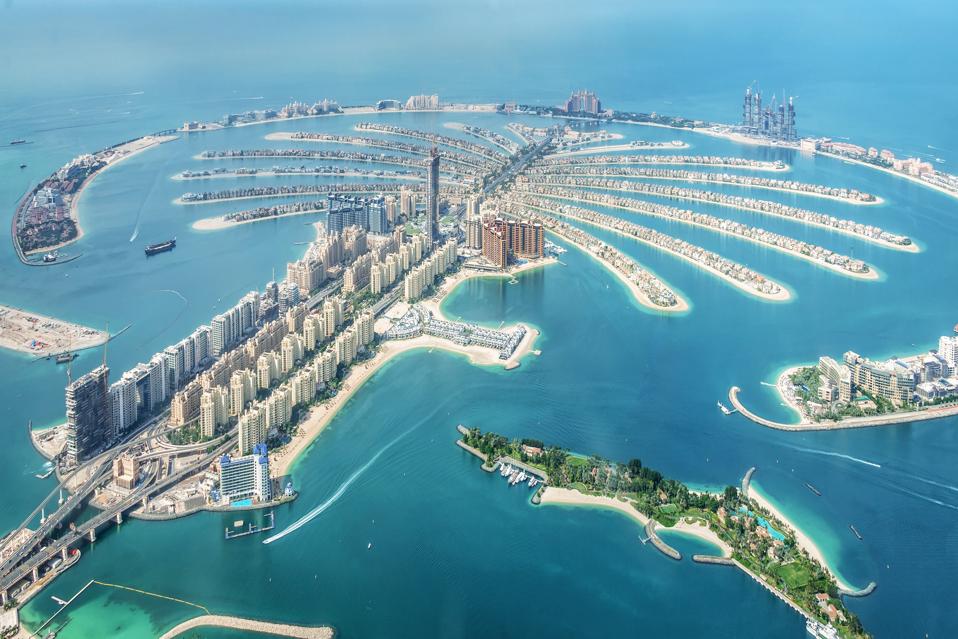
Explore Palm Jumeirah, Dubai's iconic man-made island in the United Arab Emirates. Discover its unique palm-tree design, luxury resorts, and stunning views.
<h2>Overview</h2><p>Palm Jumeirah, an iconic artificial archipelago located in Dubai, United Arab Emirates, stands as a remarkable testament to human ingenuity and ambition. Shaped like a date palm tree, a symbol deeply rooted in UAE culture, it extends five kilometers into the Arabian Gulf, dramatically increasing Dubai's shoreline. This man-made marvel is renowned globally as a premier luxury destination, offering an unparalleled blend of opulent residences, world-class resorts, and diverse attractions.</p><p>Conceived as a solution to Dubai's limited beachfront and a vision to transform the city into a leading tourist and investment hub, Palm Jumeirah has successfully positioned itself as a global icon. It is part of the larger 'Palm Islands' development and is visible even from space, making it a unique landmark on the world stage.</p><h2>History & Cultural Background</h2><p>The genesis of Palm Jumeirah dates back to the late 1990s, driven by the visionary leadership of Sheikh Mohammed bin Rashid Al Maktoum, who sought to diversify Dubai's economy beyond oil and establish it as a global tourism destination. Construction commenced in June 2001, led by the Dubai-based developer Nakheel Properties. The project employed extensive land reclamation techniques, using vast quantities of sand dredged from the Persian Gulf and rocks sourced from the Hajar Mountains to build the island's foundation.</p><p>The choice of the palm tree shape was not merely aesthetic; it was deeply symbolic, representing growth, sustenance, and resilience in the Arabian Peninsula, and also strategically designed to maximize the beachfront. The land reclamation phase was largely completed by 2004, with residential units and infrastructure becoming ready by 2006-2007, and the official opening occurring in November 2008.</p><h2>What Makes It Special</h2><p>What truly sets Palm Jumeirah apart is its extraordinary engineering and meticulous design. The island was constructed without using concrete or steel for its foundation, relying instead entirely on natural materials: 120 million cubic meters of sand from the seabed and 7 million tons of rock. This massive undertaking created a unique structure comprising a 'trunk', 17 'fronds', and an 11-kilometer 'crescent' breakwater that encircles and protects the island from the Arabian Gulf's powerful waves.</p><p>The palm tree design significantly extended Dubai's coastline by 56 kilometers, an achievement that would have been impossible with a simpler, sun-shaped design initially proposed. The precise shaping of the island was achieved using advanced GPS technology and satellite imagery. It stands as a powerful symbol of Dubai's innovative spirit, transforming what was once open sea into a thriving, luxurious community and a globally recognized landmark.</p><h2>Stories, Fun Facts & Local Details</h2><ul><li><strong>A Visionary's Insight:</strong> Originally, a sun-shaped island offering 7 kilometers of beaches was considered, but Sheikh Mohammed bin Rashid Al Maktoum insisted on a design that would yield 70 kilometers of beaches, leading to the intricate palm frond layout.</li><li><strong>Visible from Space:</strong> Its immense size and distinctive shape make Palm Jumeirah one of the few man-made structures visible to the naked eye from space.</li><li><strong>Monumental Scale:</strong> The estimated cost of the project was around $12 billion, making it one of the most expensive engineering feats globally. The sand used could form a two-meter high wall that would circle the Earth three times.</li><li><strong>Celebrity Appeal:</strong> The island is home to luxury villas and apartments, attracting numerous high-profile residents and investors, including international celebrities.</li><li><strong>Environmental Adaptations:</strong> To minimize ecological impact, builders implemented measures such as introducing openings in the breakwater to improve water flow and quality, and relocating coral reefs.</li></ul><h2>Visitor Perspective</h2><p>For the curious traveler, Palm Jumeirah offers a plethora of experiences. The island is freely accessible to the public, allowing visitors to explore its promenades, hotels, and scenic viewpoints. It is home to numerous luxury hotels and resorts, including the iconic Atlantis, The Palm, which features attractions like Aquaventure Waterpark and The Lost Chambers Aquarium.</p><p>Visitors can enjoy a variety of activities, from relaxing on pristine beaches and enjoying watersports to fine dining at Michelin-starred restaurants and exploring upscale shopping malls like Nakheel Mall. For panoramic views of the island, the Arabian Gulf, and the Dubai skyline, 'The View at The Palm' observation deck, located on the 52nd floor of Palm Tower, offers a breathtaking perspective. The Palm Monorail provides convenient transportation across the island, connecting various points including Atlantis. The best time to visit is during the cooler months, from October to April, for pleasant outdoor activities, though booking attractions in advance is recommended during peak season.</p>
Location
Coordinates: 55.13333, 25.11806
View on Google Maps