Louvre Museum
Paris, France

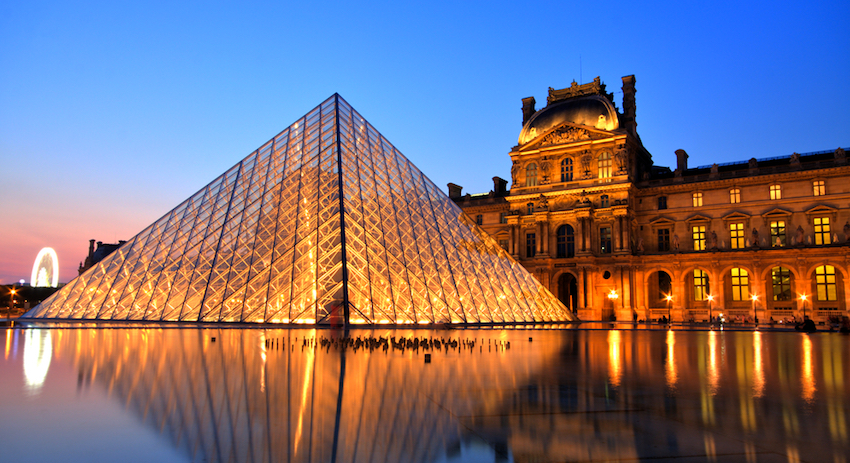
Explore the Louvre Museum in Paris, France, home to iconic masterpieces like the Mona Lisa and Venus de Milo. Discover centuries of art and history in this world-renowned institution.
<h2>Overview</h2><p>The Louvre Museum, nestled on the Right Bank of the Seine in the heart of Paris, France, stands as a beacon of art and history. It is globally recognized as the most visited art museum, welcoming millions of curious travelers each year to explore its vast collections. What began as a medieval fortress eventually transformed into a royal palace before its grand inauguration as a public museum. Today, it houses an extraordinary array of artworks and artifacts, spanning from ancient civilizations to the mid-19th century, making it a pivotal institution for understanding human artistic achievement. The museum's expansive galleries, covering approximately 60,600 square meters, exhibit around 35,000 works at any given time, drawn from a collection that boasts hundreds of thousands of objects. Among its priceless treasures are world-renowned masterpieces like Leonardo da Vinci's 'Mona Lisa,' the ancient Greek sculpture 'Venus de Milo,' and the majestic 'Winged Victory of Samothrace,' each drawing crowds and inspiring awe.</p><h2>History & Cultural Background</h2><p>The story of the Louvre is deeply interwoven with the fabric of French history. Its origins trace back to the late 12th century, around 1190, when King Philip II commissioned its construction as a formidable fortress to protect Paris from invaders, particularly from the west. Over centuries, as Paris expanded and the fortress lost its defensive utility, the structure underwent significant transformations. In 1546, King Francis I initiated its conversion into a lavish royal residence, marking the beginning of its evolution into a grand palace. Subsequent monarchs added to its grandeur, but it was Louis XIV who, in 1682, moved the royal court to Versailles, leaving the Louvre primarily as a prestigious location to display the royal art collection.</p><p>A pivotal moment arrived during the French Revolution. The National Assembly decreed that the Louvre should become a public museum, making art accessible to all citizens. It officially opened its doors on August 10, 1793, showcasing an initial collection of 537 paintings, many of which were confiscated from royal and church properties. For a period during Napoleon's reign, it was even known as the 'Musée Napoléon,' with its collection vastly expanded by artworks acquired during military campaigns, though many were later returned to their countries of origin. The most recent significant architectural addition was the iconic glass pyramid, designed by I.M. Pei, which was inaugurated in 1988 as part of the ambitious Grand Louvre project initiated in 1983. Remarkably, visitors can still explore remnants of the original medieval fortress in the museum's basement, offering a tangible link to its distant past.</p><h2>What Makes It Special</h2><p>The Louvre's unparalleled distinction lies not only in its status as the world's most visited art museum but also in the sheer breadth, depth, and historical significance of its collections. It offers an extraordinary journey through human civilization, housing masterpieces that collectively narrate millennia of artistic expression. The museum's eight curatorial departments span everything from Egyptian Antiquities, Near Eastern Antiquities, and Islamic Art to Greek, Etruscan, and Roman Antiquities, Sculptures, Decorative Arts, Paintings, and Prints and Drawings.</p><p>Its 'Big Three' – the enigmatic 'Mona Lisa,' the timeless 'Venus de Milo,' and the dramatic 'Winged Victory of Samothrace' – are universally recognized cultural touchstones that draw visitors from every corner of the globe. Beyond these, the Louvre boasts other monumental works such as 'The Great Sphinx of Tanis,' the colossal 'The Wedding at Cana' by Paolo Veronese, and Eugène Delacroix's powerful 'Liberty Leading the People.' The building itself is a masterpiece, a former royal palace whose architecture, from its Renaissance facades to the modern glass pyramid, tells its own story of transformation and grandeur. This harmonious blend of ancient history, royal legacy, and artistic genius truly sets the Louvre apart as a unique and indispensable cultural institution.</p><h2>Stories, Fun Facts & Local Details</h2><p>The Louvre is brimming with captivating stories and intriguing facts that bring its art and history to life. For instance, Leonardo da Vinci's 'Mona Lisa,' while arguably the most famous painting in the world, is surprisingly modest in size, and her eyes seem to follow viewers around the room. She once even hung in Napoleon's bedroom. The 'Venus de Milo,' discovered without arms, continues to hold a mystique, as her original pose and what she held remain subjects of debate. Among its impressive collection, Paolo Veronese's 'The Wedding at Cana' holds the distinction of being the largest painting in the museum.</p><p>The striking glass pyramid, designed by I.M. Pei, was initially met with controversy, with some critics dubbing it the 'cheese dome.' There was even a false rumor that it comprised exactly 666 panes of glass, a number associated with the devil; in reality, it has 673 panes. Intriguingly, the pyramid is said to align with the sun's movements, reflecting ancient Egyptian architectural principles. The museum is also rumored to be haunted by a ghost known as the 'Red Man,' who allegedly appeared to Catherine de Medici and Napoleon Bonaparte, with sightings said to portend disaster. The oldest artifact on display is the 'Ain Ghazal Statue,' a 9,000-year-old figure, connecting modern visitors directly to the earliest forms of human artistry. Such is the vastness of the Louvre's collection that it would theoretically take over 100 days to view every single artwork if one were to spend just 30 seconds on each.</p><h2>Visitor Perspective</h2><p>Visiting the Louvre is an unforgettable experience, but a little planning goes a long way. The museum is generally open every day except Tuesdays, with extended evening hours on Fridays, offering a chance to explore with fewer crowds. It is highly recommended to book your timed entry tickets online in advance to bypass potentially long queues at the entrance.</p><p>While the iconic glass pyramid serves as the main entrance, alternative entry points like the Carrousel du Louvre and Porte des Lions (for those with tickets) can often be less congested. Given the museum's immense size, spanning roughly 15 acres of exhibition space, comfortable shoes are an absolute necessity. Instead of attempting to see everything in one visit – a near-impossible feat – consider focusing on a few specific departments or following a themed trail to make your experience more enjoyable and less overwhelming. For families, admission to the permanent collections and temporary exhibitions is free for visitors under 18 years old, and for those under 26 who are residents of the European Economic Area. The museum also provides various amenities, including information desks, cloakrooms, and accessible facilities such as foldable chairs and sensory bags for visitors with specific needs, ensuring a comfortable visit for everyone.</p>
Location
Coordinates: 2.3376, 48.8606
View on Google Maps