Jabal al-Rahmah
Mecca, Saudi Arabia

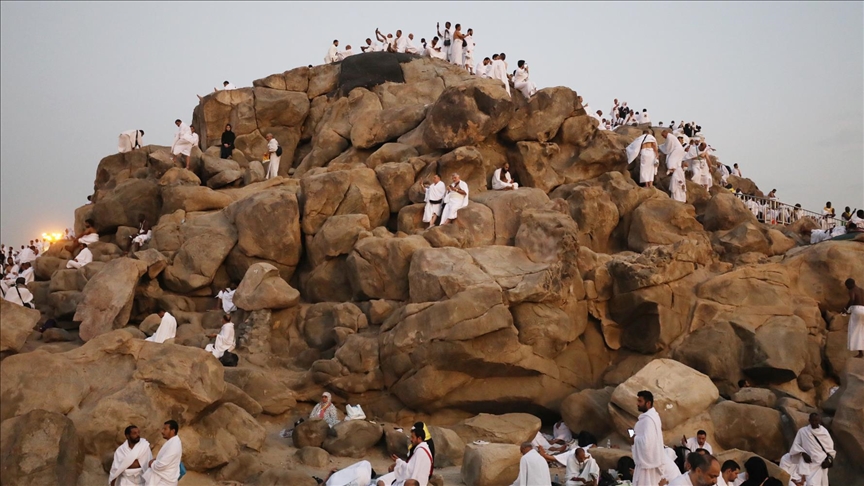
Explore Jabal al-Rahmah, the 'Mountain of Mercy' in Mount Arafat, Mecca, Saudi Arabia – a site of profound Islamic history and spiritual significance.
<h2>Overview</h2><p>Jabal al-Rahmah, famously known as the 'Mountain of Mercy,' stands as a profoundly significant landmark within the vast plains of Mount Arafat in Mecca, Saudi Arabia. This modest granite hill, rising approximately 65 to 70 meters from the surrounding terrain, reaches an elevation of around 372 meters above sea level. Its name itself, 'Jabal ar-Rahmah,' beautifully encapsulates its spiritual essence, representing divine mercy. [3, 4, 5, 9, 15]</p><p>Located about 20 to 22 kilometers southeast of the Grand Mosque in Mecca, Jabal al-Rahmah is not merely a geological feature but a focal point for millions of Muslims worldwide. [3, 4, 5, 6, 9, 22] While the entire plain of Arafat holds immense importance, particularly during the annual Hajj pilgrimage, the presence of Jabal al-Rahmah adds a unique layer of historical and spiritual depth. Its summit is marked by a distinctive white pillar, guiding pilgrims to a spot believed to be of immense significance. [7, 9, 11, 22]</p><h2>History & Cultural Background</h2><p>The historical and cultural roots of Jabal al-Rahmah delve deep into Islamic tradition, making it a revered site for its connections to pivotal events. The most widely cited event is the Farewell Sermon (Khutbah al-Wada) delivered by Prophet Muhammad (peace be upon him) during his final Hajj in 632 CE. Standing on or near this hill, the Prophet imparted crucial teachings on equality, justice, the rights of women, and the sanctity of life, effectively outlining the foundational principles of Islam. [3, 5, 6, 8, 9, 10, 11, 15]</p><p>Beyond the Farewell Sermon, Islamic narratives also associate Jabal al-Rahmah with the poignant reunion of Prophet Adam (peace be upon him) and Hawa (Eve) after their descent from Heaven. After centuries of separation, their meeting on this very spot is believed to symbolize forgiveness and the boundless mercy of Allah, further solidifying the hill's designation as the 'Mountain of Mercy.' [3, 4, 5, 9, 11, 12, 15, 23] Some traditions also suggest a connection to Prophet Ibrahim (peace be upon him), adding to its sacred legacy. [12]</p><h2>What Makes It Special</h2><p>Jabal al-Rahmah's profound spiritual resonance is what truly sets it apart. It represents a place where forgiveness is sought and mercy is believed to be abundant. For pilgrims performing the Hajj, the 'standing' (Wuquf) in Arafat on the 9th day of Dhul Hijjah is the most critical rite; its omission invalidates the entire pilgrimage. [3, 5, 10, 22] While the ritual involves being anywhere on the plain of Arafat, many pilgrims are drawn to Jabal al-Rahmah specifically to pray and reflect. [4, 7, 11]</p><p>The white pillar at its peak serves as a symbolic marker, a silent witness to the Prophet's final sermon and the completion of the Islamic religion, as some accounts state that the final verse of the Quran (Al-Maidah verse 3) was revealed here, declaring Islam's perfection. [18] This convergence of historical weight and spiritual yearning transforms the granite hill into a powerful symbol of faith, repentance, and unity.</p><h2>Stories, Fun Facts & Local Details</h2><ul><li><strong>The Meaning of 'Arafat':</strong> The word 'Arafat' itself means 'to know' or 'to get acquainted.' This is often linked to the story of Adam and Hawa recognizing each other on this spot. [3, 23, 25]</li><li><strong>The Day of Arafah:</strong> The 9th of Dhul Hijjah, when pilgrims gather on the plains, is known as the Day of Arafah. Fasting on this day for those not performing Hajj is believed to expiate sins of the past and coming year, highlighting its immense spiritual value beyond the pilgrimage itself. [3, 15]</li><li><strong>A Symbol of Unity:</strong> During Hajj, millions of pilgrims from diverse backgrounds, dressed in simple white Ihram garments, stand together on the plain of Arafat, transcending worldly distinctions. This creates an unparalleled scene of human unity and equality before God. [7, 8, 22]</li><li><strong>Not a Mandatory Climb:</strong> While many pilgrims ascend Jabal al-Rahmah, it's important to note that climbing to its summit is not a mandatory ritual of Hajj. The core observance is the 'standing' on the plain of Arafat. [7, 16]</li><li><strong>A Place of Supplication:</strong> Jabal al-Rahmah is considered an especially potent place for making heartfelt supplications (Du'a), with the belief that prayers are readily accepted here. [3, 5, 14, 25]</li></ul><h2>Visitor Perspective</h2><p>For visitors, approaching Jabal al-Rahmah is often an emotional and humbling experience. Stairs provide relatively easy access to the peak, inviting reflection and prayer. [14, 16, 17] From the summit, one can take in panoramic views of the vast plain of Arafat, visualizing the millions who gather there during Hajj. [14]</p><p>Recent development efforts have enhanced visitor comfort, introducing facilities like commercial kiosks, drinking water fountains, shaded seating areas, and misting fans. [20] However, respectful conduct is paramount; visitors are reminded to maintain modest attire and avoid practices such as writing on the hillside or treating the monument atop the hill as an object of worship, as these actions are discouraged and sometimes illegal. [11, 17, 18] Outside of the Hajj season, Jabal al-Rahmah offers a serene atmosphere for personal reflection and a deeper connection to Islamic history. Those planning a visit outside Hajj should aim for early morning or late afternoon to avoid the intense midday heat and, crucially, avoid the 9th of Dhul Hijjah due to restrictions and immense crowds. [16]</p>
Location
Coordinates: 39.98406, 21.35484
View on Google Maps