Hudson Yards Overlook
New York, United States

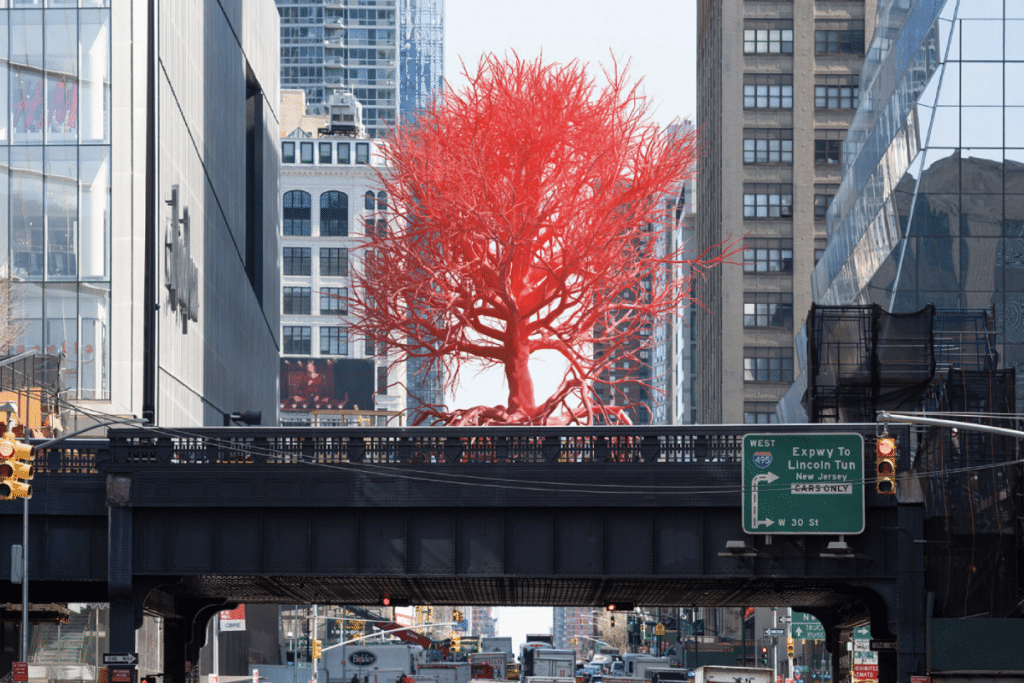
Discover the Hudson Yards Overlook along New York's High Line. Experience unique views of cutting-edge architecture and urban green space in the United States.
<h2>Overview</h2> <p>Perched above the bustling streets of Manhattan, the Hudson Yards Overlook isn't a single, formally named attraction but rather a collection of breathtaking vantage points found along the northern sections of New York City's renowned High Line. This elevated park, transformed from an abandoned railway line, offers unparalleled views into the sprawling, modern marvel that is Hudson Yards and beyond. As visitors stroll along the High Line's artfully designed pathways, they encounter deliberate pauses and architectural features that frame the impressive skyscrapers, public art installations, and vibrant energy of the Hudson Yards development. It's a place where the city's industrial past gracefully merges with its ambitious future, inviting curious travelers to witness New York's constant evolution from a unique, elevated perspective.</p> <h2>History & Cultural Background</h2> <p>The story of the High Line, and by extension the Hudson Yards Overlook, is one of remarkable urban transformation. Originally constructed in the 1930s as an elevated freight rail line to lift dangerous trains off New York's streets, it served as a vital artery for transporting goods to Manhattan's factories and warehouses. This railway played a crucial role, carrying meat, produce, and factory goods across the West Side, famously earning the nickname 'Death Avenue' before its elevation due to the numerous accidents involving street-level trains. By 1980, with the rise of interstate trucking, the last train ran on the High Line, leaving the structure derelict and overgrown. For nearly two decades, the structure faced demolition threats. However, in 1999, the non-profit organization Friends of the High Line was formed by two neighborhood residents, Joshua David and Robert Hammond, who envisioned transforming the abandoned tracks into a public park. Their efforts, supported by community leaders and designers, led to its phased opening, beginning in 2009. The final section, wrapping around and into the Hudson Yards site, opened in late 2014, fully integrating this historic pathway with the city's newest mega-development.</p> <h2>What Makes It Special</h2> <p>The Hudson Yards Overlook, as part of the High Line, stands out for several compelling reasons. Firstly, it embodies adaptive reuse at its finest, showcasing how industrial relics can be reimagined as vibrant public spaces. The design itself, a collaboration between James Corner Field Operations, Diller Scofidio + Renfro, and Piet Oudolf, meticulously blends rugged industrial elements with lush, naturalistic plantings, many of which are inspired by the wild self-seeded landscape that took over the tracks during their abandoned years. Secondly, it offers a dynamic visual narrative. From this elevated perch, visitors gain a panoramic view of the architectural ambition of Hudson Yards, including its towering skyscrapers, the iconic Vessel structure, and the sprawling public square and gardens. The perspective allows for contemplation of the sheer scale of urban development, often seeing construction in progress that reshapes the city's skyline. It’s a literal bridge between Manhattan’s past and its cutting-edge future, providing a unique vantage point that seamlessly connects nature, art, and urban design.</p> <h2>Stories, Fun Facts & Local Details</h2> <ul> <li><strong>A Seed of Inspiration:</strong> The initial vision for the High Line was sparked when its founders discovered the tracks overrun with wildflowers and grasses, inspiring the idea of a 'park in the sky.' Today, the High Line boasts over 500 different species of plants, with more than 120 native to New York's boroughs.</li> <li><strong>Architectural Dialogue:</strong> As you look out from the High Line towards Hudson Yards, you'll notice how some of the new buildings, such as 10 Hudson Yards, cantilever over the High Line Spur, creating an intriguing architectural dialogue between the park and the surrounding structures. The development itself was built on a platform over an active rail yard, an engineering feat that allowed trains to remain operational underneath.</li> <li><strong>Public Art Gallery:</strong> The High Line serves as an open-air art gallery, featuring rotating exhibitions and permanent installations that enhance the visitor's journey. This constant rotation ensures that each visit can offer new discoveries.</li> <li><strong>Economic Catalyst:</strong> The High Line has been credited with profoundly transforming the surrounding neighborhoods, spurring significant high-end development and dramatically increasing real estate values in West Chelsea and Hudson Yards, essentially creating a new luxury ecosystem.</li> </ul> <h2>Visitor Perspective</h2> <p>Walking the High Line to experience the Hudson Yards Overlook is a journey of discovery and perspective. It allows for a tranquil escape above the city's hustle, offering moments of quiet reflection amidst natural beauty and expansive urban vistas. Visitors can take their time, meandering through lush gardens that change with the seasons, observing public art, and finding benches to sit and soak in the views. The integration of the High Line with Hudson Yards means easy access to dining, shopping, and other attractions like The Vessel and The Shed once you descend. It's a place that appeals to architecture enthusiasts, nature lovers, and anyone seeking a fresh, elevated perspective on one of the world's most dynamic cities. The combination of historical layers, innovative design, and ever-changing cityscapes ensures a memorable experience for every traveler.</p>
Location
Coordinates: -74.00282, 40.75306
View on Google Maps