Hall of Mirrors
Versailles, France

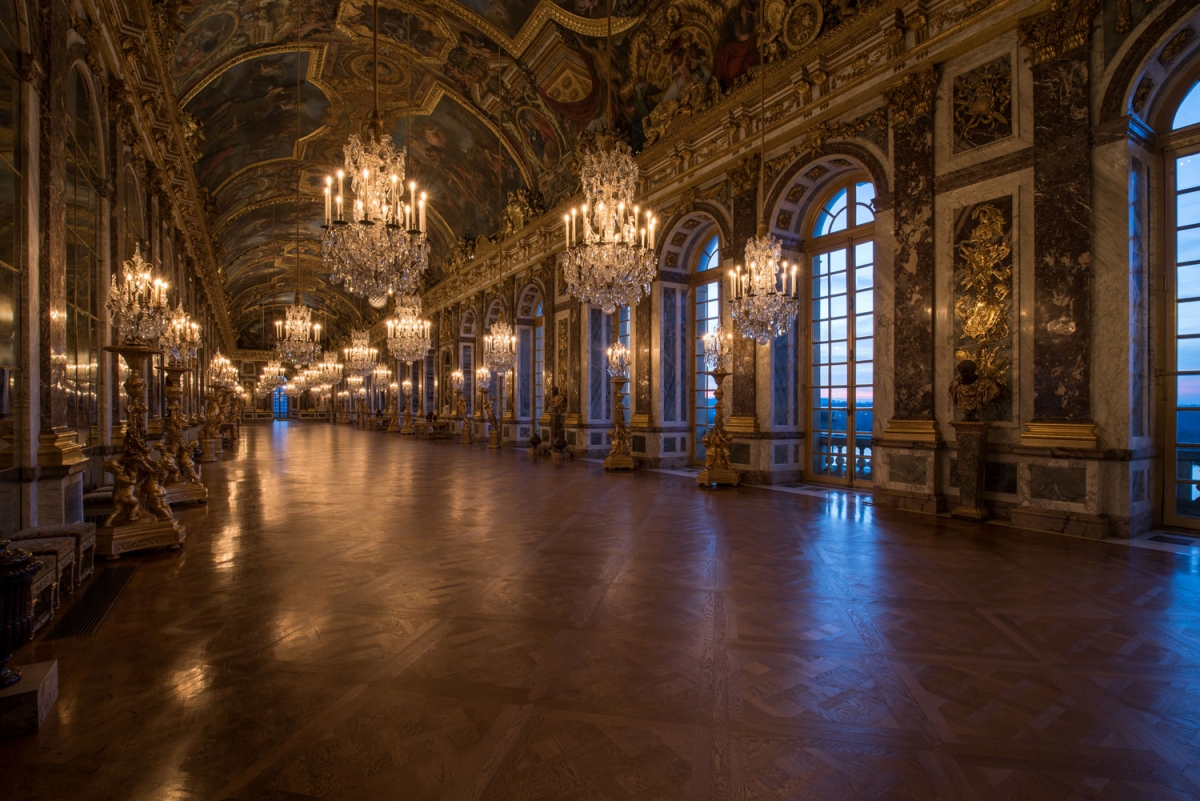
Explore the Hall of Mirrors at the Palace of Versailles, France – a stunning Baroque gallery showcasing Louis XIV's power, art, and history.
<h2>Overview</h2><p>Stepping into the Hall of Mirrors, or the Galerie des Glaces as it's known in French, is to enter a world where light, artistry, and power converge. Located within the opulent Palace of Versailles in Versailles, France, this iconic gallery is much more than a mere passageway; it's a testament to the grandeur and vision of King Louis XIV. Stretching an impressive 73 meters (240 feet) long, 10.5 meters (34 feet) wide, and 12.3 meters (40 feet) high, the hall captivates visitors with its dazzling display of 357 mirrors reflecting the natural light from 17 arched windows overlooking the palace's meticulously manicured gardens. It was conceived as a symbol of France's economic, political, and artistic triumphs, serving both as a ceremonial space and a potent declaration of royal authority.</p><p>This magnificent room replaced an awkward open terrace that once connected the King's and Queen's apartments, proving susceptible to the elements. Its transformation into an enclosed, resplendent gallery created a prestigious link and provided an unparalleled setting for the most significant events of the French court.</p><h2>History & Cultural Background</h2><p>The construction of the Hall of Mirrors took place between 1678 and 1684, during a period of immense prosperity and influence for France under Louis XIV, often referred to as the 'Sun King'. The architectural genius behind its structure was Jules Hardouin-Mansart, while the intricate interior decoration, particularly the ceiling paintings, was the masterful work of Charles Le Brun, the king's first painter. The decision to incorporate such a vast number of mirrors was a bold statement. In the 17th century, the technology for producing high-quality glass mirrors was a closely guarded secret of Venice, making them extraordinarily expensive and luxurious items. By commissioning 357 mirrors, Louis XIV not only showcased France's immense wealth but also its burgeoning technological prowess, effectively challenging Venice's monopoly.</p><p>The Hall's design was deeply rooted in the cultural and political aspirations of its time. The ceiling paintings by Le Brun are not merely decorative; they form a grand narrative, illustrating the political and military successes of the first 18 years of Louis XIV's reign, including events from the War with Holland and the War of Devolution. This visually rich tapestry of allegorical scenes and historical events glorified the monarch and reinforced the concept of absolute rule.</p><h2>What Makes It Special</h2><p>What truly distinguishes the Hall of Mirrors is its breathtaking blend of luxury, scale, and symbolic meaning. The 17 large arched mirrors perfectly align with the 17 windows opposite them, creating an illusion of infinite space and luminosity. This architectural marvel transformed the Hall into a dazzling tunnel of light, reflecting the gardens outside and, metaphorically, the 'Sun King's' radiance across his realm.</p><p>The lavish use of marble, gilded bronze, and the meticulously painted ceiling combine to create an overwhelming sense of opulence and power. Every detail was designed to impress foreign dignitaries and solidify France's position as the leading cultural and political power in Europe. It was a space where the king could display his control over light and space, mirroring his control over his kingdom.</p><h2>Stories, Fun Facts & Local Details</h2><ul><li><strong>A Challenge to Venice:</strong> The production of the Hall's many mirrors was a significant undertaking for French manufacturers, directly challenging the Venetian Republic's closely guarded secret for mirror-making. It was a clear demonstration of French skill and ambition.</li><li><strong>Ceremonial Hub:</strong> Beyond its beauty, the Hall was a vibrant center of royal life. It hosted grand receptions for ambassadors, celebrations of princely weddings, and even royal balls, though lavish ballroom lighting was often temporary for such events.</li><li><strong>The Treaty of Versailles:</strong> Perhaps its most famous historical moment, the Hall of Mirrors was the setting for the signing of the Treaty of Versailles on June 28, 1919, officially ending World War I. This event dramatically underscored the room's enduring significance on the world stage.</li><li><strong>Proclamation of an Empire:</strong> Before the treaty, the Hall also witnessed the Proclamation of the German Empire on January 18, 1871, following France's defeat in the Franco-Prussian War.</li><li><strong>The Missing Silver Furniture:</strong> During the Hall's early years, it was adorned with magnificent solid silver furniture, including a throne. However, this priceless collection was later melted down by Louis XIV to fund his wars.</li></ul><h2>Visitor Perspective</h2><p>A visit to the Hall of Mirrors is an essential part of any trip to the Palace of Versailles. Included with a standard Palace ticket, this gallery can feel awe-inspiring yet sometimes crowded, reflecting its immense popularity. To truly appreciate its splendor, consider visiting earlier in the morning or later in the afternoon. The ever-changing natural light that pours through the windows and is endlessly reflected by the mirrors creates different moods throughout the day, transforming the space. Look closely at the allegorical paintings on the vaulted ceiling and imagine the lavish court life that once unfolded beneath them. The sheer scale and intricate details of the Hall are best experienced in person, allowing its historical weight and breathtaking beauty to fully sink in.</p>
Location
Coordinates: 2.1203, 48.8047
View on Google Maps