Courtyards and Narrow Alleyways
Dubai, United Arab Emirates

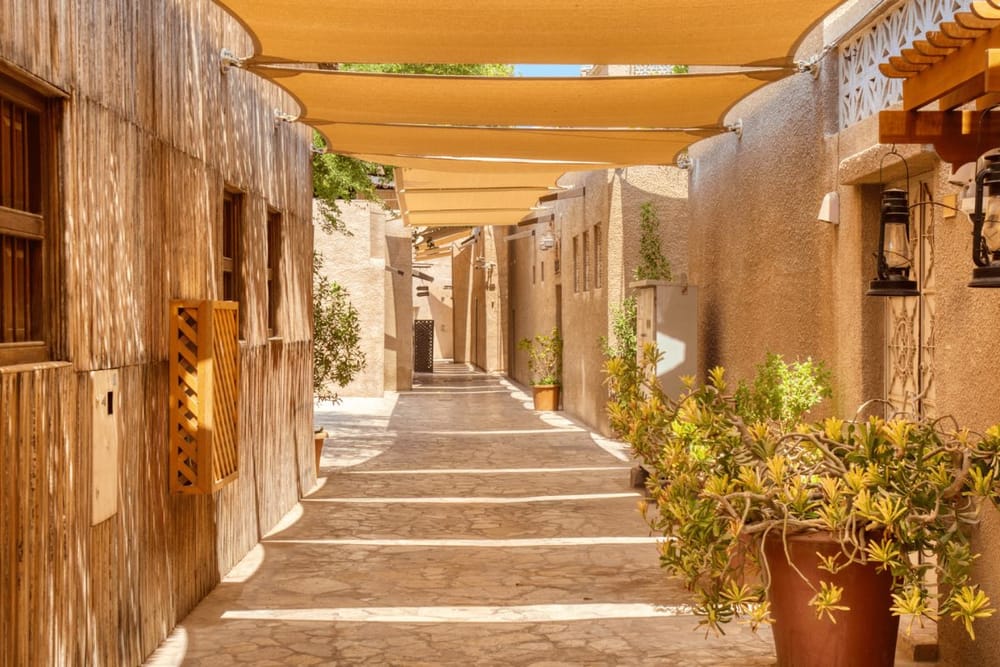
Explore the historic 'Courtyards and Narrow Alleyways' in Dubai's Al Fahidi Historical Neighborhood, uncovering ancient Emirati culture and architecture.
<h2>Overview</h2><p>Stepping into the 'Courtyards and Narrow Alleyways' of Al Fahidi Historical Neighborhood in Dubai, United Arab Emirates, is like traveling back in time. This beautifully preserved district, often referred to by its former name, Al Bastakiya, offers a serene contrast to Dubai's modern skyline, inviting visitors to discover the city's rich past. The intricate network of courtyards and winding alleyways, known as 'sikkas', forms the very heart and soul of this heritage area, telling stories of a bygone era when Dubai was a thriving port town driven by trade and pearl diving.</p><p>These architectural features are not merely decorative; they were ingeniously designed to create a comfortable living environment in the harsh desert climate. Today, a stroll through these shaded passages reveals traditional houses, art galleries, museums, and cultural centers, all meticulously restored to their former glory. It's a place where every turn presents a glimpse into the traditional Emirati way of life, offering an authentic cultural experience that connects visitors with the roots of this dynamic city.</p><h2>History & Cultural Background</h2><p>The Al Fahidi Historical Neighborhood dates back to the late 19th century, specifically the 1890s, when it was established by affluent Persian merchants who migrated from Bastak, Iran. These traders were drawn to Dubai by its burgeoning trade opportunities and favorable tax incentives. The district quickly became a bustling community, initially named Al Bastakiya, reflecting the origins of its early settlers.</p><p>The unique architectural style of Al Fahidi, with its distinctive courtyards and narrow alleyways, was a direct reflection of the needs and cultural values of its inhabitants. Constructed from traditional materials like coral stone, gypsum, teak, sandalwood, and palm wood, the buildings were designed for both privacy and natural climate control. The neighborhood faced the threat of demolition in the 1980s amidst Dubai's rapid modernization. However, thanks to concerted preservation efforts, including an appeal to Prince Charles by a British architect, the area was saved and meticulously restored, standing today as a vital testament to Dubai's cultural heritage.</p><h2>What Makes It Special</h2><p>What truly sets the 'Courtyards and Narrow Alleyways' apart is their ingenious design, which elegantly solved the challenges of desert living long before modern air conditioning. The narrowness of the alleyways was deliberately planned to create deep shade throughout the day, while also acting as natural wind tunnels that channeled cooling breezes through the district.</p><p>The traditional homes, often two stories high, incorporate large central courtyards, which served as the private heart of the family home and provided additional cooling through stack ventilation. The iconic wind towers, or 'barjeels', are another remarkable feature, capturing prevailing winds and directing cool air into the interiors. The scarcity and high placement of windows in the outer walls further underscore a cultural emphasis on privacy and family seclusion, principles deeply woven into the very fabric of the neighborhood's layout. This blend of functionality and cultural insight makes exploring these passages a uniquely enriching experience.</p><h2>Stories, Fun Facts & Local Details</h2><p>Legend has it that the winding alleys of Al Fahidi were intentionally built to confuse outsiders, thereby enhancing the privacy and security of the families residing within its walls. This labyrinthine quality adds a layer of intrigue to any visit, encouraging curious travelers to lose themselves in discovery. The courtyards themselves were vibrant centers of daily life, where families gathered, children played, and women often socialized, away from the public gaze.</p><p>A notable fun fact is that the number of wind towers a house possessed once signified the social standing and wealth of its owner, with wealthier families often boasting more elaborate structures. Beyond their practical purpose, these architectural elements tell a story of human ingenuity and adaptation. Today, many of these historical houses have been repurposed into cultural institutions. For example, the Coffee Museum, located within the district, delves into the important role of coffee in Arabic culture, offering a unique local detail for visitors to explore.</p><h2>Visitor Perspective</h2><p>For the curious traveler, visiting the 'Courtyards and Narrow Alleyways' offers a captivating journey away from the glitz of modern Dubai. The best way to experience this area is on foot, allowing ample time to wander through the peaceful, stone-paved passages and discover the hidden gems within. The ambiance is remarkably tranquil, providing a stark contrast to the city's bustling pace.</p><p>Visitors can engage with the vibrant cultural scene by stepping into the numerous art galleries showcasing local and regional talent, exploring specialized museums that narrate different facets of Emirati history, or participating in cultural talks at institutions like the Sheikh Mohammed Centre for Cultural Understanding. Traditional Emirati houses are open to view, offering a firsthand look at their unique architecture and the lifestyles they once housed. It's an immersive experience, allowing one to absorb the details, appreciate the historical context, and gain a deeper understanding of Dubai's authentic past.</p>
Location
Coordinates: 55.3, 25.2583
View on Google Maps