Chelsea Market Passage
New York, United States

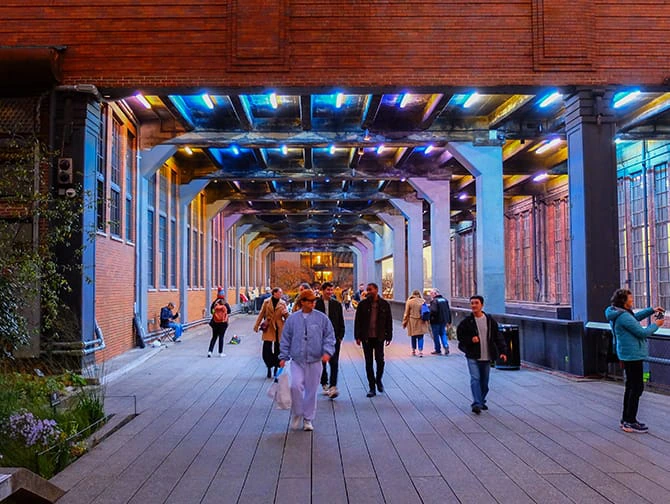
Explore the Chelsea Market Passage on New York's High Line, a unique section blending historic railway architecture with modern art and food in NYC, United States.
<h2>Overview</h2><p>Nestled within the vibrant tapestry of New York City's High Line, the Chelsea Market Passage offers a distinctive experience, seamlessly blending the park's elevated greenway with the historic industrial architecture of the iconic Chelsea Market building. This enclosed, yet expansive, section of the High Line runs between West 15th and 16th Streets, providing a unique transition from the open-air park into the bustling market below. It stands as a testament to innovative urban reuse, transforming a vital piece of the city's railway past into a dynamic public space for art, culture, and culinary exploration.</p><p>As you traverse the High Line, the Chelsea Market Passage emerges as a covered haven, inviting visitors to pause and immerse themselves in its unique ambiance. It's not merely a walkway; it’s a living corridor where the High Line's artistic spirit converges with the market's vibrant energy, creating a focal point for both locals and travelers seeking a deeper connection to New York's rich history and contemporary pulse.</p><h2>History & Cultural Background</h2><p>The story of the Chelsea Market Passage is intrinsically linked to the broader history of the High Line and the industrial heritage of West Chelsea. The High Line itself originated as part of the New York Central Railroad's West Side Line, an elevated freight railway constructed in the 1930s. This ambitious project aimed to alleviate the dangerous street-level train traffic that had earned 10th and 11th Avenues the grim moniker 'Death Avenue' due to numerous accidents.</p><p>Before its transformation, the High Line served as a crucial artery for transporting goods, including dairy, meat, and produce, directly to factories and warehouses. One of the most significant buildings it passed through was the National Biscuit Company (Nabisco) factory, which today houses Chelsea Market. This factory was a hub of innovation, famously where the beloved Oreo cookie was invented in 1912. The section now known as Chelsea Market Passage was once a functioning rail tunnel, through which trains delivered supplies to and from this colossal bakery.</p><p>After rail operations ceased in 1980, the elevated structure fell into disuse and disrepair, becoming an overgrown relic slated for demolition. However, a grassroots movement, led by community activists and the 'Friends of the High Line,' championed its preservation and rebirth as a public park, inspired by similar projects like Paris's Promenade Plantée. Their dedication saved the tracks, paving the way for the creation of the High Line park, which opened its first section in 2009. The Chelsea Market Passage was thus revitalized, integrating its industrial past into its new identity.</p><h2>What Makes It Special</h2><p>What sets the Chelsea Market Passage apart is its architectural embrace of its former industrial purpose. Unlike other sections of the High Line that are open to the sky, this passage is a soaring covered space, preserving the original structure of the elevated railway as it cuts through the historic Chelsea Market building. This unique design creates a distinct indoor-outdoor feel, offering shelter from the elements while maintaining the elevated perspective of the High Line.</p><p>The passage is not just a path; it's a vibrant cultural hub. It frequently hosts rotating art installations, performances, and special events, making it a dynamic canvas for contemporary creativity. The integration of public art within this historic backdrop provides a compelling contrast and a continuous source of discovery for visitors. It also serves as a prime location for High Line food vendors, especially from late April through late October, offering a taste of New York's diverse culinary scene.</p><p>Furthermore, the Chelsea Market Passage provides a direct and seamless connection to the renowned Chelsea Market itself. This allows visitors to effortlessly transition from a contemplative stroll above the city to an immersive experience within one of New York's most celebrated food halls and retail destinations, making it a pivotal point along the High Line's journey.</p><h2>Stories, Fun Facts & Local Details</h2><p>One of the most delicious fun facts connected to this area is the birth of the Oreo cookie. The very building that the Chelsea Market Passage now traverses was once the Nabisco factory where this iconic sandwich cookie was invented and first produced in 1912. Imagine the trains rumbling through, delivering ingredients and carrying away freshly baked goods that would become a global sensation.</p><p>The passage has also served as a canvas for thought-provoking art. For several years, it was home to Spencer Finch's 'The River That Flows Both Ways,' an installation composed of 700 panes of glass, each representing a minute of the Hudson River's changing appearance over 700 minutes. This subtle yet profound piece connected the elevated park to the natural flow of the nearby river.</p><p>Before the High Line's elevation, the street-level railways were so perilous that the city employed 'West Side Cowboys'—men on horseback who rode ahead of the trains waving red flags (or lanterns at night) to warn pedestrians. This vivid historical detail underscores the dramatic necessity of the elevated railway, which eventually led to the structure we enjoy today.</p><h2>Visitor Perspective</h2><p>Walking through the Chelsea Market Passage offers a truly unique perspective on New York City. The sense of being enclosed yet elevated, with glimpses of both the sky and the bustling streets below, creates an intimate and engaging experience. The architectural elements, including the preserved railway tracks and industrial design, serve as constant reminders of the site's rich past.</p><p>Visitors often appreciate the opportunity to browse the various food vendors and temporary art installations that enliven the passage, adding layers of discovery to their High Line journey. It's a prime spot to grab a snack, enjoy a performance, or simply take a moment to absorb the creative energy. The direct access to Chelsea Market means that a High Line walk can easily extend into a culinary adventure or a shopping excursion, making the passage a gateway to further exploration. It is a favored gathering spot, offering both a glimpse into history and a taste of contemporary urban culture.</p>
Location
Coordinates: -74.00621, 40.742352
View on Google Maps