Brooklyn Bridge
New York, United States

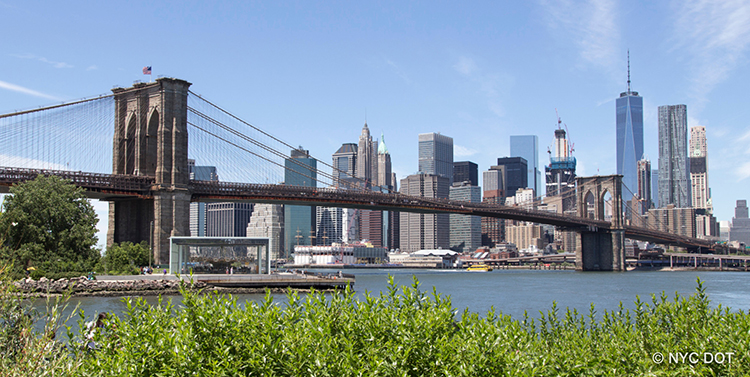
Discover the iconic Brooklyn Bridge in New York, United States. Explore its rich history, innovative engineering, and stunning views.
<h2>Overview</h2><p>The Brooklyn Bridge, a majestic and enduring icon of New York City, stands as a testament to 19th-century engineering prowess and human ambition. Spanning the East River, it gracefully connects the boroughs of Manhattan and Brooklyn, serving as a vital thoroughfare for millions of commuters and a captivating landmark for visitors from around the globe. This cable-stayed suspension bridge, with its distinctive Neo-Gothic towers and intricate web of steel cables, offers breathtaking panoramic views of the city skyline, the Statue of Liberty, and the bustling waterways below. More than just a bridge, it is a symbol of connection, progress, and the unbreakable spirit of New York.</p><h2>History & Cultural Background</h2><p>The ambitious vision for a bridge linking Manhattan and Brooklyn originated with John Augustus Roebling, a German immigrant engineer known for his pioneering work in suspension bridge design. Construction began in 1869, a monumental undertaking fraught with peril and innovation. Sadly, John A. Roebling suffered a fatal injury during the preliminary stages, leaving his son, Washington Roebling, to take over as chief engineer. Washington, too, faced immense challenges, including succumbing to decompression sickness (caisson disease) from working in the underwater foundations. Despite his debilitating illness, he continued to oversee the project from his apartment, with the indispensable help of his wife, Emily Warren Roebling. Emily became a critical liaison, translating her husband's instructions to the engineers and contractors on site, mastering engineering principles herself. The bridge was finally completed and opened to great fanfare on May 24, 1883, after 14 years of construction and a cost of over $15 million. At the time of its inauguration, it was the longest suspension bridge in the world, a truly revolutionary feat of engineering that utilized steel wire for its cables—a first in bridge building. Its striking Gothic Revival architectural style, with grand stone arches, quickly solidified its place as a cherished landmark and a beacon of American ingenuity.</p><h2>What Makes It Special</h2><p>The Brooklyn Bridge holds a unique place in history due to several pioneering aspects. It was the first suspension bridge to use steel for its cable wire, a significant innovation that paved the way for modern skyscraper construction. Its main span, stretching 1,595.5 feet (486.3 meters), made it the longest suspension bridge globally upon its completion, a record it held for many years. The construction involved the use of pneumatic caissons, a challenging and dangerous technique for laying foundations deep underwater. The bridge's two majestic towers, constructed from limestone, granite, and Rosendale cement, rise 272 feet (82.9 meters) above the East River and feature iconic pointed arches, embodying the Neo-Gothic architectural style. Beyond its structural integrity, the Brooklyn Bridge was built approximately six times stronger than necessary, a testament to its designers' foresight and dedication to safety.</p><h2>Stories, Fun Facts & Local Details</h2><p>The Brooklyn Bridge has inspired countless stories and has itself been the subject of fascinating historical anecdotes. One of the most famous events occurred in 1884 when the legendary showman P.T. Barnum led a parade of 21 elephants, along with camels and other circus animals, across the bridge. This spectacle, witnessed by thousands, was a clever publicity stunt designed to both promote his circus and reassure the public of the bridge's structural soundness following a deadly stampede incident a week after its opening. The bridge's aesthetic and symbolic power have made it a recurring motif in literature, poetry, art, and film, serving as a powerful emblem of New York City and American progress. Its enduring presence has shaped the identity of the city, fostering economic growth and facilitating the merger of New York and Brooklyn into a single metropolis.</p><h2>Visitor Perspective</h2><p>Experiencing the Brooklyn Bridge firsthand is an essential part of any New York City visit. The bridge features a dedicated pedestrian walkway elevated above the traffic lanes, offering a safe and uniquely scenic path. Many visitors choose to walk or bike across the bridge, a journey that typically takes 25-40 minutes, depending on the number of photo stops. For the most iconic views of the Manhattan skyline, it is highly recommended to start your walk from the Brooklyn side and head towards Manhattan. Access points in Brooklyn include Washington Street and Prospect Street in DUMBO, or Cadman Plaza East and Tillary Street. On the Manhattan side, the entrance is near City Hall Park, close to the Brooklyn Bridge-City Hall subway station. To avoid the largest crowds, particularly during peak tourist season, consider visiting early in the morning or in the late afternoon closer to sunset for beautiful golden hour photography. Crossing the Brooklyn Bridge is free and accessible 24 hours a day, offering an unforgettable perspective on one of the world's most dynamic cities.</p>
Location
Coordinates: -73.9964, 40.7057
View on Google Maps