Assyrian Lion Hunt Reliefs
London, United Kingdom

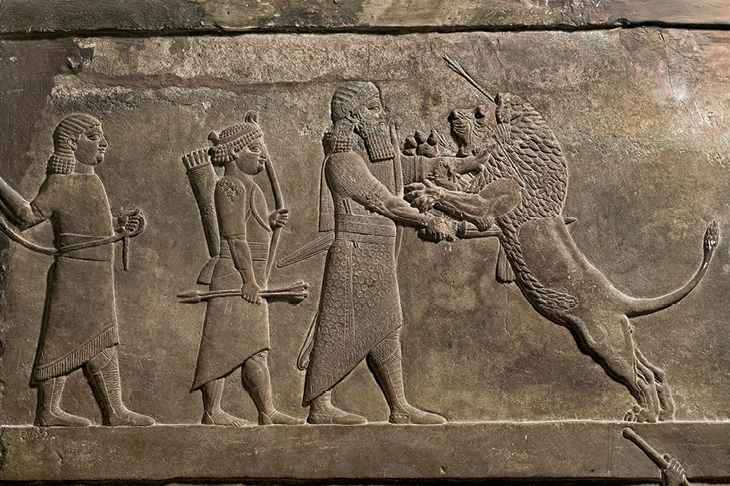
Discover the Assyrian Lion Hunt Reliefs at the British Museum in London, United Kingdom. Witness these ancient masterpieces depicting royal hunts.
<h2>Overview</h2><p>Step into ancient Mesopotamia within the hallowed halls of the British Museum in London, United Kingdom, to witness the extraordinary Assyrian Lion Hunt Reliefs. Housed prominently in Room 10a, these ancient stone carvings are widely celebrated as the ‘supreme masterpieces of Assyrian art’. Dating from approximately 645–635 BC, these monumental reliefs originally adorned the walls of King Ashurbanipal’s North Palace in Nineveh, located in modern-day northern Iraq.</p><p>These compelling artworks vividly portray royal lion hunts, a ceremonial activity that symbolized the ruling monarch's vital duty to protect and provide for his people. The reliefs capture the entire dramatic sequence: the release of powerful lions, the thrilling chase across the landscape, and their ultimate demise at the hands of the king and his retinue. Full of tension and remarkable realism, the reliefs offer a profound glimpse into the power and ideology of the Neo-Assyrian Empire.</p><h2>History & Cultural Background</h2><p>For millennia in Mesopotamia, the hunting of lions was not merely a sport but a sacred royal prerogative, steeped in symbolism. The tradition predates these specific reliefs by over a thousand years, with earlier depictions showing 'priest-kings' engaged in similar acts. In Assyrian culture, the lion represented the untamed, chaotic forces of nature, and the king's ability to subdue such a formidable beast underscored his divine mandate to maintain order within his realm. This ritualistic hunt held deep religious significance, serving as a powerful public declaration of the king's protective capabilities.</p><p>King Ashurbanipal, who reigned from 668–631 BC, was the last great ruler of the Neo-Assyrian Empire. The reliefs were commissioned for his palace at Nineveh, the capital city. It's important to understand that these hunts were often carefully orchestrated, staged events, sometimes taking place within specially constructed arenas or game parks rather than in the wild. Lions, sometimes even raised from cubs, would be released from cages for the king to hunt with arrows, spears, or a sword, transforming the event into a public spectacle akin to later Roman arena games. After Ashurbanipal’s reign, the once-mighty Assyrian Empire quickly succumbed to civil war and was sacked by 612 BC, making these reliefs some of the last grand artistic expressions of this ancient civilization. The reliefs themselves were excavated in the 19th century from the ruins of Nineveh, bringing these ancient narratives to light for the modern world.</p><h2>What Makes It Special</h2><p>The Assyrian Lion Hunt Reliefs stand out not only for their historical significance but also for their profound artistic merit. They are widely considered to be among the finest achievements of Assyrian art, showcasing a level of naturalism and dramatic intensity rarely seen in the ancient world. Unlike the often-stylized and stoic depictions of the human figures, especially the king, the lions are rendered with astonishing detail and emotional depth. The artists masterfully captured the animals' raw power, their desperate struggle, and even their agonizing moments of death, conveying a sense of pathos that is truly remarkable for its time.</p><p>These reliefs are also notable as some of the earliest and most sophisticated examples of narrative art, telling a coherent and dramatic story across multiple panels. They brilliantly glorify King Ashurbanipal as a 'complete action hero,' demonstrating his bravery, skill, and unyielding power over nature's most formidable creatures. The intricate carvings on the alabaster panels allow visitors to trace the narrative of the hunt, from the energetic charge of the released animals to their final, often poignant, collapse.</p><h2>Stories, Fun Facts & Local Details</h2><p>The lions depicted in the reliefs were Asiatic lions, a species native to ancient Mesopotamia and generally smaller than their African counterparts, making their close-quarters hunting, as shown, a feasible feat. Interestingly, ancient texts reveal specific protocols surrounding these powerful animals; a surviving clay tablet describes how a lion that entered a house in the provinces had to be captured and delivered to the king by boat.</p><p>One intriguing theory suggests that Ashurbanipal's staged hunts, which involved the killing of possibly 18 lions, might have been linked to a magical ritual to protect the 18 gates of Nineveh. The king’s artistic representation deliberately exaggerated his stature, portraying him taller and more imposing than other figures, even if not true to reality, to visually emphasize his supreme authority. The palace corridors themselves were designed to tell a story; visitors might walk past reliefs showing courtiers journeying out to the hunting grounds and then, on an opposing wall, returning triumphantly with their slain quarry. This immersive storytelling through art allowed the king to project an image of unwavering power and divine favor throughout his palace.</p><h2>Visitor Perspective</h2><p>Experiencing the Assyrian Lion Hunt Reliefs at the British Museum is a journey back in time, offering a direct connection to a powerful ancient civilization. Located in Room 10a, these reliefs are a significant highlight for anyone interested in Mesopotamian history, art, and the intricate symbolism of royal power. The museum itself is a world-renowned institution, offering free entry to its permanent collection, including these incredible artifacts.</p><p>The British Museum is conveniently situated in the heart of London at Great Russell Street, WC1B 3DG. It operates daily from 10:00 to 17:00, with extended hours until 20:30 on Fridays. To ensure a smooth visit, especially during peak times, it's advisable to book your free entry ticket in advance, which can also provide priority entry. The museum is well-connected by London's public transport system, with Tottenham Court Road station being a recommended accessible option. Allow ample time to fully absorb the dramatic narratives and the astonishing artistic detail of these ancient masterpieces.</p>
Location
Coordinates: -0.127, 51.5194
View on Google Maps